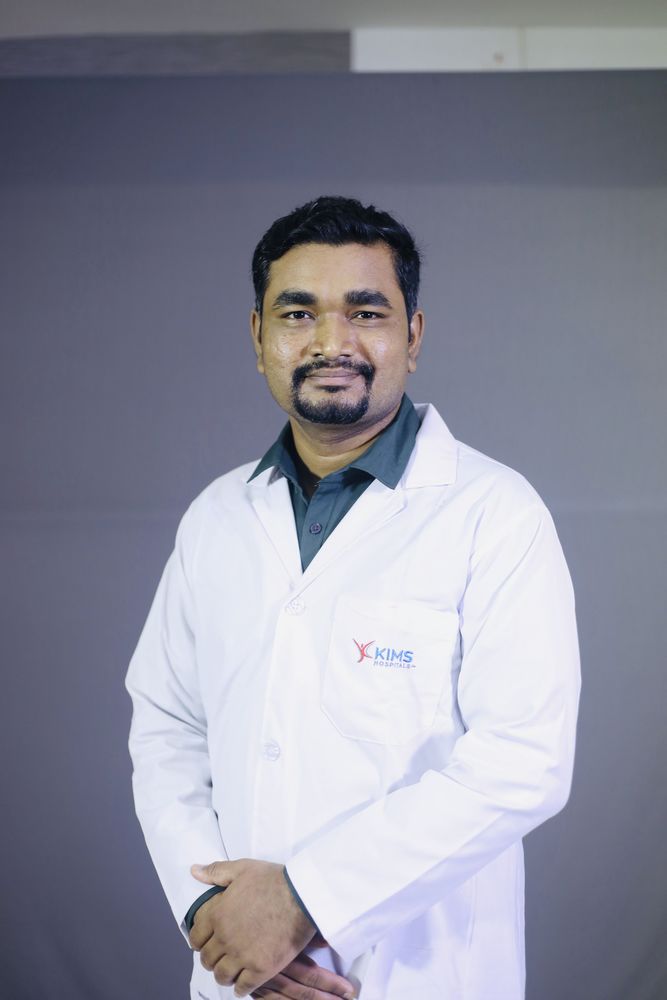
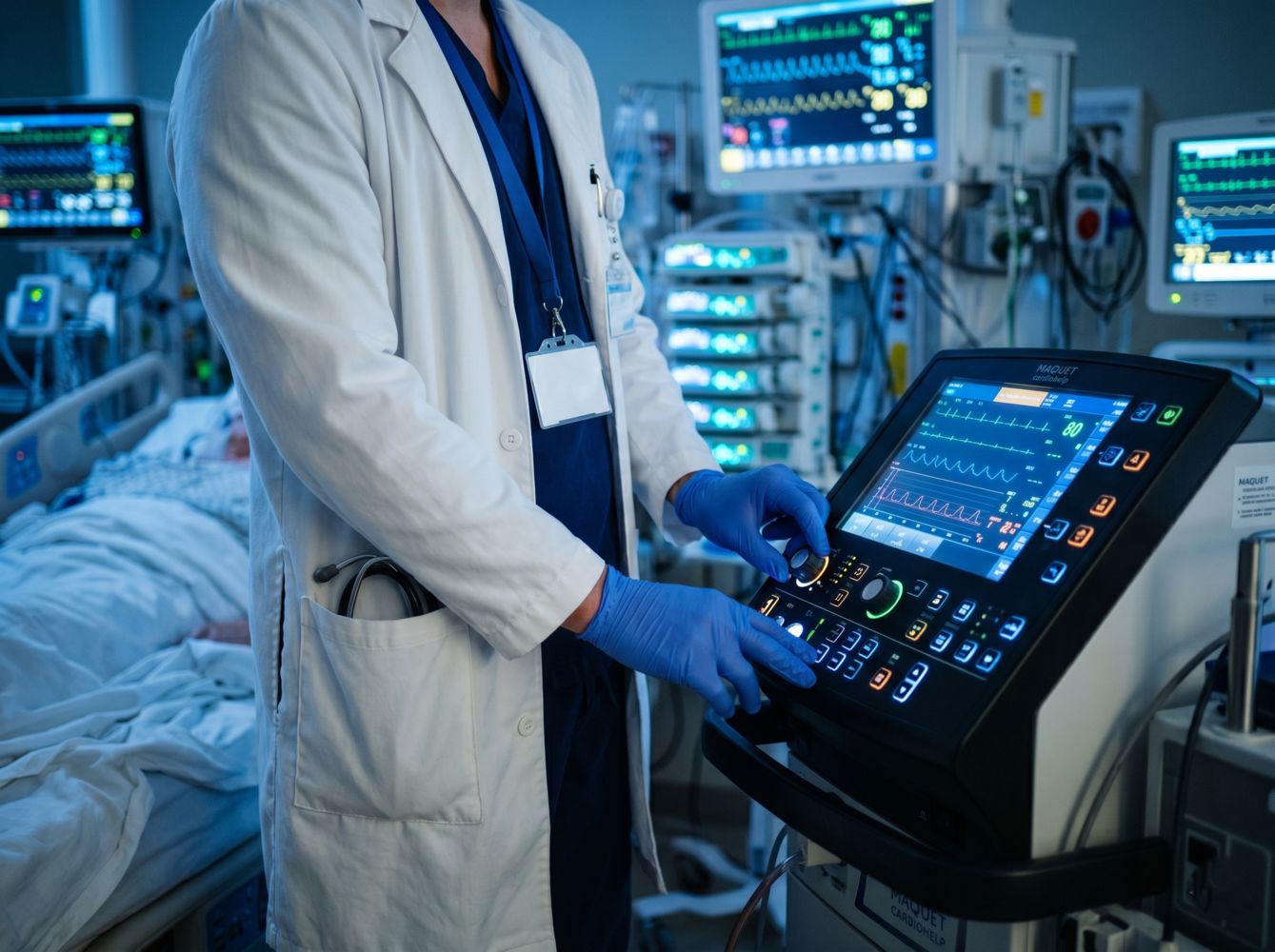
Extracorporeal membrane oxygenation - ECMO - is a temporary heart-lung bypass that takes over gas exchange when the patient’s own lungs cannot. I am Dr. Manjunath M Negigoudara, Transplant Pulmonologist at KIMS Hospital, Electronic City, Bengaluru. At our centre, ECMO is used in two distinct clinical scenarios, and the difference between them shapes everything that follows: the duration of support, the daily clinical questions, the family conversations, the transplant listing, and the long-term plan.
In short
Bridge to recovery is ECMO used to give a damaged lung time to heal - the underlying problem is reversible. Bridge to transplant is ECMO used to keep a patient alive until a donor lung becomes available - the underlying lung is not recoverable. Same machine, two very different decisions. The EOLIA trial (NEJM 2018) established the modern case for ECMO in severe ARDS (60-day mortality 35% vs 46% conventional ventilation). ELSO registry data show 55-65% survival for bridge-to-recovery ARDS, and 60-70% survival to transplant for bridge-to-transplant patients selected appropriately. Awake ambulatory ECMO - walking the corridor while on the machine - is the single biggest advance of the last decade.
What is bridge to recovery ECMO?
In this mode, ECMO is a placeholder. The patient has had an acute lung injury - severe ARDS from pneumonia, influenza, COVID-19, aspiration, drowning, smoke inhalation, post-operative lung failure - and the lung tissue is expected to recover if given the time and the right protective ventilation strategy.
The seminal evidence for this use is the EOLIA trial (NEJM 2018), which randomised 249 patients with severe ARDS to early ECMO vs conventional ventilation with ECMO rescue. Sixty-day mortality was 35% in the ECMO arm vs 46% in the control arm (relative risk 0.76). The trial was stopped early for futility on strict statistical grounds - but a subsequent Bayesian re-analysis in JAMA and a post-hoc crossover analysis strongly support ECMO benefit in the sickest subgroup. Modern international guidance is to consider ECMO in severe ARDS with PaO2/FiO2 ratio below 80 despite optimal ventilation, or with severe hypercapnic acidosis unresponsive to protective ventilation.
The clinical questions during the bridge-to-recovery phase are:
- Are gas exchange markers (oxygenation, CO2 clearance) improving on lower ECMO support?
- Can ventilator settings be reduced to lung-protective levels (low tidal volume ~4-6 mL/kg, low driving pressure <15 cmH2O)?
- Is imaging showing resolution of consolidation?
- Is the patient awake, mobilising, eating, and free of new infection?
When all these move in the right direction, Dr. Manjunath M Negigoudara and the KIMS ECMO team begin weaning - reducing flow and sweep gas in steps over 24-72 hours. If the patient maintains adequate gas exchange on the ventilator alone, the cannulas come out. Many patients then go on to a relatively normal recovery, returning home within 2-4 weeks of decannulation.
What we look for in the first week
The trajectory in the first 5-7 days on ECMO is the single most important predictor of outcome. A patient whose lung compliance is improving and whose CT shows aerated lung returning is almost certainly going to be a bridge-to-recovery case. A patient with rising fibrosis markers, no improvement in compliance, and progressive consolidation may need to be considered for transplant evaluation in parallel.
What is bridge to transplant ECMO?
This is the harder conversation. The patient has end-stage lung disease - IPF, COPD, post-COVID or post-TB fibrosis, primary graft dysfunction after a previous transplant - that has decompensated, and the native lungs have no realistic chance of recovery. ECMO is now keeping the patient alive until a donor is found.
The reference data for this pathway is the JHLT 2021 bridge-to-transplant outcomes paper, which analysed a large single-centre series and reported median ECMO duration of 22 days before transplant. Post-transplant one-year survival for bridge-to-transplant patients selected appropriately was comparable to non-ECMO transplant recipients (approximately 80-85%). The determining factor was patient condition at listing and during the wait - not the fact of ECMO itself.
The clinical questions shift:
- Is the patient already an accepted transplant candidate, or do we need to evaluate now?
- What is the realistic waiting time given blood group, body size, and current listing pressure?
- Can we keep the patient mobile, awake, and nutritionally well during the wait?
- Are we preserving the option of bilateral lung transplant (as opposed to single), which has better long-term outcomes in younger patients?
The single most important advance in bridge-to-transplant ECMO has been awake mobilisation. A patient walking the corridor on ECMO arrives at the operating room weeks ahead of a patient who has been sedated and ventilated.
Awake ECMO - why mobilisation matters
A patient lying sedated and ventilated for weeks while waiting for a donor loses muscle mass fast - ICU-acquired weakness sets in within 5-7 days of immobility - and arrives at the operating room markedly weaker than they would be otherwise. The single most important advance in bridge-to-transplant ECMO has been awake mobilisation: extubating the patient where possible, getting them sitting in a chair, walking with assistance, eating real food, doing physiotherapy.
At Dr. Manjunath M Negigoudara’s programme at KIMS Electronic City, patients on ECMO routinely walk the corridor with a physiotherapist, eat meals, communicate with family, and participate in their own care plan. These patients have substantially better post-transplant outcomes - faster extubation, shorter ICU stays, faster rehabilitation.
What is the difference between VV and VA ECMO?
The choice between veno-venous (VV) and veno-arterial (VA) ECMO is determined by whether the problem is lung-only or heart-and-lung. The decision matrix:
| Factor | VV ECMO | VA ECMO |
|---|---|---|
| Primary problem | Lung failure only | Combined heart + lung failure, or cardiogenic shock |
| Cannulation | Venous drainage + venous return (typically femoral + jugular) | Venous drainage + arterial return (typically femoral vein + femoral artery) |
| Cardiac support | None - relies on native heart function | Full biventricular support |
| Anticoagulation intensity | Lower (ACT 160-180) | Higher (ACT 180-220) |
| Ambulation feasibility | Good (upper body cannulation possible) | Limited (femoral arterial cannula anchors patient) |
| Limb ischaemia risk | Low | 5-15% (distal perfusion catheter required) |
| Typical use | Severe ARDS, bridge to lung transplant | Cardiogenic shock, primary graft dysfunction post-transplant, combined heart-lung failure |
In most lung disease scenarios, VV is the correct choice. VA is reserved for combined cardiac-respiratory failure or specific post-cardiac-surgery scenarios. The mode can be converted mid-course if clinical condition changes.
How is the decision made day by day?
In practice, the line between bridge-to-recovery and bridge-to-transplant is rarely drawn at the moment of cannulation. Many patients begin on ECMO with the hope that their lungs will recover, and Dr. Manjunath M Negigoudara revisits the question at fixed intervals:
| Day | Key clinical question | Decision if improving | Decision if not improving |
|---|---|---|---|
| Day 3-5 | Is lung compliance improving? Are ventilator pressures dropping? | Continue bridge-to-recovery pathway | Send imaging + PFT trend to transplant coordinator; begin family conversation |
| Day 7 | CT chest reassessment. Aerated lung returning? | Begin weaning trial | Formal transplant candidacy evaluation begins in parallel |
| Day 14 | Trajectory clearly one direction or the other? | Weaning ongoing; plan decannulation | List for transplant; optimise nutrition, mobilise if possible |
| Day 21 | Long stay - is patient still fit to survive transplant? | Rare - if still on ECMO by day 21, recovery is unlikely | Aggressive rehabilitation, infection prophylaxis, family + funding coordination |
| Day 28+ | Cumulative complication risk rising steeply | Decannulate | Reassess candidacy carefully; some patients may no longer be fit |
If the lungs are clearly improving by day 7, the plan is recovery. If they are clearly worsening, transplant evaluation begins immediately. If the picture is mixed, we continue protective support and re-assess. The worst outcomes happen when this decision is delayed - a patient who is left on ECMO without a clear plan for 4-6 weeks loses the chance at either outcome.
Does ECMO work for COVID-19?
COVID-19 tested ECMO programmes globally. Per the Lancet 2020 ELSO analysis of 1,035 COVID-19 ECMO patients across 213 hospitals, 90-day in-hospital mortality was 37.4% - in line with pre-pandemic severe ARDS ECMO outcomes (36-38%). Outcomes deteriorated later in the pandemic as case-mix shifted to more comorbid patients and centres less experienced with long-run ECMO took on cases.
For those whose lungs never recovered, transplant became an option. In the United States, 364 COVID-related lung transplants were performed between October 2020 and early 2023 - 223 for COVID ARDS on ECMO, 141 for post-COVID fibrosis. In 2021, COVID accounted for close to 10% of all US lung transplants. Waiting periods before transplant: 4-6 weeks after COVID ARDS, 3-6 months for post-COVID fibrosis. For the Indian context see our detailed post-COVID lung damage treatment guide.
Referring a patient for ECMO or transplant assessment? Call early.
Inter-hospital ECMO retrieval - placing cannulas at the referring hospital and bringing the patient on ECMO to KIMS Electronic City - is possible but always higher-risk than initiating ECMO in our own ICU. Earlier calls to Dr. Manjunath M Negigoudara almost always lead to better outcomes.
What are the complications of ECMO?
Per ELSO registry data, cumulative complications rise with duration. Modern centres including KIMS Electronic City manage these proactively with daily multi-disciplinary rounds, lower-intensity anticoagulation protocols, and early mobilisation.
| Complication | ELSO registry incidence | Mitigation |
|---|---|---|
| Bleeding (surgical site, GI, intracranial) | 15-30% | Lower-intensity heparin (ACT 160-180), aminocaproic acid where needed |
| Thrombosis (circuit, cannula) | 10-20% | Circuit inspection q4h, oxygenator change per protocol |
| Infection (cannulation site, bloodstream) | 15-25% | Full sterile cannulation, dressing protocols, prophylactic antifungals in prolonged runs |
| Limb ischaemia (VA) | 5-15% | Distal perfusion catheter, hourly pulse checks |
| Neurological (stroke, ICH) | 3-8% | Daily neuro exam, MAP targets, low-intensity anticoagulation |
| Renal failure requiring RRT | 25-35% | Nephrology co-management, CRRT integrated into circuit if needed |
| ICU-acquired weakness | 50%+ if sedated/ventilated for >10 days | Awake ambulatory protocol - single most impactful mitigation |
Why must an ECMO programme sit beside a transplant programme?
ECMO without access to transplant is a one-way street: if the lungs do not recover, the patient dies. Transplant without ECMO support means you cannot rescue patients who deteriorate while waiting. The two capabilities should sit in the same centre, run by overlapping teams.
That is the model at KIMS Electronic City - the ECMO programme and the lung transplant programme share rounds, share decision-making, and share the same nursing and physiotherapy team. It is one of the reasons outcomes have improved. Dr. Manjunath M Negigoudara is the transplant pulmonologist across both pathways, providing continuity from ICU admission through transplant listing, surgery and long-term follow-up.
Why work with Dr. Manjunath M Negigoudara at KIMS Electronic City for ECMO
ECMO is one of the highest-stakes decisions in critical care. It is technically demanding, resource-intensive, and easy to get wrong in a low-volume centre. Choosing where to have it matters as much as the decision itself.
Dr. Manjunath M Negigoudara is the Transplant Pulmonologist leading the medical arm of the KIMS Electronic City lung transplant + ECMO programme. His training:
- MBBS (Gold Medalist) - Bangalore Medical College
- MD Pulmonary Medicine - JSS Medical College
- DNB Respiratory Medicine - National Board of Examinations
- FIP - Fellowship in Interventional Pulmonology - Manipal Hospitals
- Karnataka Medical Council Reg. No. 116911
Dr. Manjunath has personally managed 250+ lung transplant cases, many bridged on ECMO, within the KIMS Institute of Heart and Lung Transplant, which has completed 780+ thoracic transplants. He was national faculty at the NAPCON 2025 ECMO workshop, and has faculty appointments at ISHLT, ESOT and INSHLT.
For related consultations:
- Best lung transplant doctor in Bangalore
- Transplant pulmonologist in Bangalore
- Who needs a lung transplant? - candidacy referral criteria
- Post-COVID lung damage guide
For referring physicians: when to ask about ECMO
If you are managing a patient with severe acute respiratory failure - PaO2/FiO2 ratio below 80 on optimal ventilation, or rising CO2 with severe acidosis - or a known end-stage lung disease patient who is deteriorating rapidly, the time to call is before the patient becomes too unstable to transport.
Inter-hospital ECMO retrieval - placing cannulas at the referring hospital and bringing the patient on ECMO - is possible but always higher-risk than initiating ECMO in the receiving ICU. Earlier conversations almost always lead to better outcomes.
Call +91 79937 41199 or WhatsApp Dr. Manjunath for an initial conversation. Records and imaging can be reviewed remotely before decision.
Frequently asked questions
What is the difference between VV ECMO and VA ECMO?
When does ECMO actually save lives in severe ARDS?
How long can a patient stay on ECMO?
Can a patient walk and eat while on ECMO?
When is ECMO not the right choice?
How is the decision to switch from bridge-to-recovery to bridge-to-transplant made?
What are the main risks of ECMO?
What were the outcomes of ECMO for COVID-19?
How long is the wait for a donor lung when a patient is on ECMO in India?
Is ECMO available everywhere in India?
How much does ECMO cost in India?
What are the outcomes of bridge-to-transplant ECMO vs bridge-to-recovery ECMO?
Medical disclaimer. This article is general information from Dr. Manjunath M Negigoudara’s clinical practice. It is not a substitute for an individual consultation. For specific advice about your condition, please schedule a consultation. For emergencies, call 108 (India) or go to your nearest emergency department.
Have a question about your case?
Talk directly with Dr. Manjunath M Negigoudara.
Consultations, second opinions and referrals are welcomed by phone or WhatsApp. Mon - Sat, 9am - 5pm at KIMS Electronic City.