

After the conversation about candidacy, the next question is almost always the same: “Doctor, what will all of this cost?” It is a fair question and deserves a clear answer. In my practice at KIMS Hospital, Electronic City, I spend almost as much time explaining the financial reality of a lung transplant as I do the clinical one - because a family that plans well goes through the procedure and the recovery with far less stress than one that is surprised by costs along the way.
In short
At our centre at KIMS Hospital, Electronic City, the standard lung transplant package is ₹36 lakh (private ward), and the pre-transplant evaluation is ₹4.5–6 lakh, billed separately. The package includes 14 days ICU isolation and 7 days private-room stay, donor lung procurement and preservation, the surgical team, all medical equipment, 8 surveillance bronchoscopies during admission, and defined sub-limits for blood products, investigations and drugs. ECMO support, dialysis, additional procedures, lifetime immunosuppression and donor-organ aviation transport (when required) are billed separately.
Why is there no single lung transplant price?
Hospitals quote a single “package figure” for lung transplant in India, and that figure is what you usually see when you Google “lung transplant cost India”. The package is real - it covers the operation, the immediate hospital stay, and a defined set of consumables - but it captures only a part of the actual financial journey.
When I sit with families, I walk them through five separate cost buckets. Each one has its own range, its own timing, and its own insurance treatment. The clearer the family is on these buckets before admission, the smoother the recovery goes.
The six buckets every family should plan for
Below is the consolidated cost breakdown that our financial counsellor at KIMS Electronic City walks through with every family. Print it, take it to your insurer, take it to a financial advisor - these six buckets are the right way to think about the financial journey, not the single “package figure” alone.
| Cost bucket | Figure | When it is paid | What it covers |
|---|---|---|---|
| Pre-transplant evaluation | ₹4.5–6 lakh | Once, before listing | PFTs, HRCT, echo, right heart cath in selected cases, infectious-disease screening, HLA typing, MDT meeting, listing fee |
| Transplant package private ward at KIMS Electronic City | ₹36 lakh | Once, at admission | 14 days ICU isolation + 7 days private room; donor lung procurement & preservation; surgical team & OT; 8 bronchoscopies; defined sub-limits for blood, investigations and drugs (see inclusions table below) |
| ECMO bridge to transplant only if required | +₹5–15 lakh | Added to admission bill | ECMO cannulation, circuit, ₹60K–1.2L per day of ICU support, inter-hospital ECMO retrieval if needed |
| Donor organ aviation transport only if required | +₹4–15 lakh | Added to admission bill | Charter flight or helicopter (chopper) for time-critical donor lung transport across cities; quoted at time of donor alert based on distance |
| Immunosuppression year 1 | ₹2–3 lakh | Monthly (lifelong) | Tacrolimus + mycophenolate + tapering prednisolone; ₹25–40K per month at higher first-year doses |
| Immunosuppression year 2 onwards | ₹1–2 lakh / yr | Monthly (lifelong) | Stabilised dose; ₹8–18K per month; further reducible on verified generics |
| Surveillance year 1 | ₹1–2 lakh | Across visits | 4–5 surveillance bronchoscopies (₹15–30K each), monthly PFTs, drug-level monitoring |
| Surveillance year 2 onwards | ₹50K–1 lakh / yr | Quarterly | Annual HRCT and echo, quarterly clinic visit, drug levels, on-demand bronchoscopy |
Package figure is the current KIMS Electronic City private-ward quote; immunosuppression and surveillance figures are typical of any high-volume Indian programme. Costs are subject to revision (15 days advance notice). A written estimate from the hospital’s financial counsellor is the only authoritative quote for your specific case.

Bucket 1: Pre-transplant evaluation - approximately ₹4.5–6 lakh
Before a patient can be listed, a structured evaluation confirms the diagnosis, rules out contraindications, and matches the patient to the right kind of transplant. Most of this work is done outpatient, with a few inpatient nights for cardiac catheterisation in selected cases. The pre-transplant work-up is billed separately from the transplant package itself.
The evaluation cost typically covers:
- Pulmonary function tests, 6-minute walk test, arterial blood gas
- HRCT chest, V/Q scan, echocardiogram, right heart catheterisation in selected cases
- Full infectious disease screening (HIV, hepatitis B and C, tuberculosis, CMV, EBV)
- Nutritional, dental, ENT, dermatology and psychosocial clearances
- Blood group and HLA typing for donor compatibility
- Multi-disciplinary team meeting and transplant listing fees
Some referring physicians complete part of this work-up locally before sending the patient, which reduces the total bill. For most ambulatory patients, the evaluation takes 1–3 weeks. For patients on ECMO support, we compress it into a few days - and that compression itself raises the per-day cost.
Bucket 2: The transplant package - ₹36 lakh at KIMS Electronic City
This is the figure most patients and families think of as “the cost”. It is what the hospital quotes in writing once the patient is accepted, and what insurers ask for during pre-authorisation. At our centre, the standard private-ward lung transplant package is ₹36 lakh, all-inclusive of the specified stay and a defined set of services.
Other Indian centres quote in a similar band - widely-cited published ranges put single lung transplant at ₹18–30 lakh and bilateral at ₹28–45 lakh depending on the hospital, the ward category and the inclusions. The KIMS package figure sits within that range and is the actual number we work to during financial counselling.
What is included in the ₹36 lakh package
Hospitals often quote a single number without an itemised breakdown, which makes it hard for families to know what they are actually paying for. Below is the detailed inclusion list as documented by our financial counselling desk.
| Inclusion | Detail / limit |
|---|---|
| ICU isolation-ward stay | 14 days post-operative |
| Private room stay | 7 days (single A/C room) |
| Donor (cadaver) lung procurement | Includes organ-preservative solution and processing |
| Operation-theatre charges | OT, anaesthesia equipment, intra-operative consumables |
| Surgical team professional fees | Lead surgeon, assistant surgeons, anaesthetist, interventional pulmonology consultation |
| Isolation-ward intensivist fees | Round-the-clock critical-care physician charges |
| Nursing care | 1:1 nursing in ICU; dedicated nursing in private room |
| Critical-care support | Ventilator, oxygen, physiotherapy - for the specified ICU stay only |
| Medical equipment | Pumps, monitors, consumables during the included stay |
| 8 surveillance bronchoscopies | During the admission (rejection + airway monitoring) |
| PPE charges | Personal protective equipment for the surgical team and ward |
| Blood products screening + transfusion | Up to ₹80,000; all products screened for HIV, HbsAg, HCV, VDRL, MP, CMV IgG, EBV (VCA & EBNA IgM), HTLV-1, Anti-HBc, Anti-HBs |
| Routine investigations blood + radiology | Up to ₹4,00,000 |
| Drugs and OT consumables | Up to ₹10,00,000 |
What the package does NOT include
Equally important is what falls outside the package. Each of these is billed at actuals, in addition to the ₹36 lakh figure:
| Exclusion | Why it sits outside |
|---|---|
| Stay beyond the specified package period | Additional ICU or ward days are billed at the standard daily rate |
| ECMO installation and procedure charges | Pre- or post-transplant ECMO is a separate, highly variable cost (see Bucket 3) |
| Any additional pulmonary intervention | Therapeutic bronchoscopy, dilatation, stenting beyond surveillance |
| Dialysis | If post-operative acute kidney injury requires renal replacement therapy |
| Blood products beyond ₹80K limit | Patients with bleeding or prolonged anticoagulation may exceed this |
| Investigations beyond ₹4 lakh limit | Additional CTs, MRIs, special microbiology in complicated cases |
| Drugs and disposables beyond ₹10 lakh limit | Complicated infections or rejection may require above-package medication |
| Consultations from other specialties | Excluded except pulmonology and cardiology (e.g., neurology, nephrology, ID add-on) |
| Food and beverages (extra diet) | For patient or family attendants - not part of the package |
| Any additional surgery / procedure | If performed alongside the transplant, billed at actuals |
The package is generous but it is not unlimited. The biggest unplanned line items in my experience are extended ICU stay, blood-product overruns in bleeding cases, and the aviation transport cost for the donor lung.
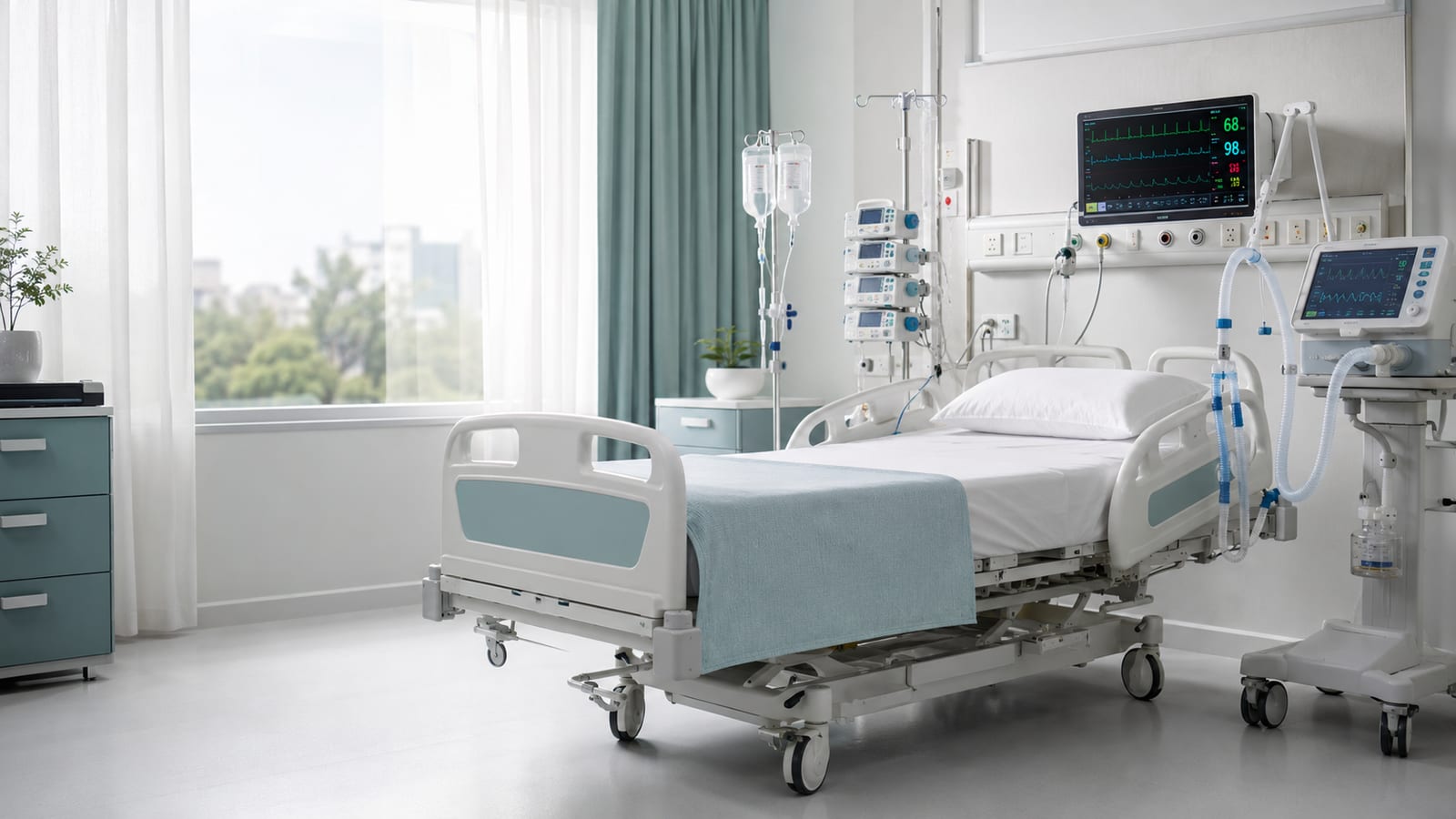
Financial clearance and organ-allocation listing
Two procedural steps must complete before the package is invoked. First, the family meets the hospital’s finance and administration teams for financial clearance - confirming the mode of payment (cash, demand draft, bank transfer, insurance pre-authorisation, or a combination). Second, once clearance is received, the patient’s name is submitted to the convener of programme (CP) as part of the “active list” for transplant candidacy.
In Karnataka, organ allocation is co-ordinated through Jeevasarthakathe - the state government’s organ donation and allocation programme, run under the South Indian regional ROTTO. Listing here is required before any cadaver lung can be allocated to the patient. The hospital’s transplant coordinator handles the submission; the family is not expected to navigate this directly.
A small but practical note from our financial counsellor: the package figure is also subject to revision under hospital protocol. When revisions happen, the intent and the effective date are communicated to listed families at least 15 days in advance - so a quote received this week is valid for at least that long.
Bucket 3: ECMO support - additional ₹5–15 lakh when needed
In some patients - especially those with rapidly worsening lungs or those who deteriorate while waiting for a donor - ECMO is used as a bridge to transplant. ECMO is life-saving in these cases but it is the single most expensive add-on in the lung transplant journey.
Plan for the following:
- ECMO cannulation and circuit set-up: ₹3–5 lakh
- Daily ECMO management and ICU care: ₹60,000–1,20,000 per day
- Typical ECMO duration before transplant: 7–21 days
- Inter-hospital ECMO retrieval (if the patient was already in another ICU): ₹2–4 lakh
In total, an ECMO bridge usually adds ₹5–15 lakh to the transplant journey, occasionally more. This is one of the most important reasons to refer patients early rather than waiting for the crisis - patients who arrive on ECMO have meaningfully higher costs and worse outcomes than those who arrive ambulatory.
Bucket 4: Donor organ aviation transport - additional ₹4–15 lakh when needed
Lung transplant is a time-critical operation. Once a donor is identified, the lung must be retrieved, preserved and transported to the recipient hospital within a tight cold-ischaemia window - usually 6–8 hours from the cross-clamp at the donor centre. When the donor is in the same city, this is straightforward and the transport cost is part of the package.
When the donor is in another city, however, the team has to use chartered air transport - either a fixed-wing aircraft or a helicopter (chopper) - to bring the organ within the ischaemia window. This is a separate cost from the surgical package and is announced to the family at the time of the donor alert.
Typical aviation transport ranges:
- Chartered helicopter (within Karnataka or short hops): ₹4–8 lakh
- Chartered fixed-wing aircraft (inter-state retrieval): ₹8–15 lakh
- Commercial scheduled flight (rare; only when timings align): ₹1–3 lakh
The actual figure is determined at the time of donor logistical planning and communicated to the family before the retrieval flight takes off. This is one of the less-discussed but most variable line items in a lung transplant, and it is the most common reason a family’s final bill exceeds the package quote.
Bucket 5: Lifetime immunosuppression
A lung transplant does not end on the day of discharge. The recipient takes immunosuppression for the rest of their life to prevent rejection. The typical first-line protocol combines tacrolimus, mycophenolate mofetil, and a tapering prednisolone. Some patients are switched to cyclosporine, azathioprine, or newer agents depending on side effects and response.
What to expect in the budget
- First 6 months: ₹25,000–40,000 per month - higher doses, frequent drug-level monitoring
- Months 7–12: ₹15,000–25,000 per month - dose stabilisation
- Year 2 onwards: ₹8,000–18,000 per month if stable on generic agents
Switching from branded to verified generic immunosuppression can reduce the monthly bill by 30–50 %. This is something I discuss with most families about 6–12 months after transplant, once the dose is stable. The clinical evidence on generic equivalence is strong for the major molecules used in transplant.

Bucket 6: Surveillance and follow-up
In the first year after transplant, surveillance is intensive - and it is the single most important factor in long-term outcomes. We monitor for rejection, infection, and airway complications at fixed intervals.
Typical first-year follow-up costs:
- Surveillance bronchoscopies (typically 4–5 in year one): ₹15,000–30,000 each
- Routine PFTs and clinic visits: monthly in year one, then quarterly
- Drug-level monitoring (tacrolimus, mycophenolate): ₹3,000–5,000 per visit
- Annual HRCT and echo
In total, plan for ₹1–2 lakh per year for surveillance in years 1–2, dropping to about ₹50,000–1 lakh annually after that if the graft is stable.
What makes a lung transplant cost more or less?
Factors that push cost up
- Bilateral instead of single lung transplant
- Need for ECMO bridge before transplant
- Re-do (second) lung transplant after a previous one has failed
- Prolonged ICU stay beyond 14 days, especially with return-to-OR or new infection
- Treatment of early acute cellular rejection requiring high-dose steroids
- Specialist airway interventions (stenting, dilatation) for early complications
- Older age and comorbidities (diabetes, kidney dysfunction) that extend recovery
Factors that keep cost down
- Earlier referral - ambulatory at admission rather than on ventilation
- Good pre-transplant rehabilitation and nutritional status
- Single rather than bilateral transplant where clinically appropriate
- Empanelled hospitals under government schemes
- Cashless insurance pre-authorisation rather than reimbursement claims
- Generic immunosuppression where clinically appropriate
Does insurance cover a lung transplant in India?
Private health insurance
Most Indian private health insurance policies cover lung transplantation, but the fine print matters enormously. Read your policy for these specific clauses:
- Waiting period - many policies have a 2–4 year waiting period for organ transplants
- Sub-limits on ICU room rent and ward rent - these can cap your effective coverage
- Co-pay percentage - some policies require the patient to pay 10–30 % of every bill
- Donor expenses - confirm in writing whether donor retrieval costs are reimbursed
- Pre and post-hospitalisation - the 30–90 day windows that cover surveillance bronchoscopies
- Exclusion of pre-existing conditions - relevant for patients with declared lung disease at policy inception
Get the transplant clause in writing and obtain pre-authorisation BEFORE admission. Verbal assurances from insurance agents are not enforceable. The hospital’s transplant coordinator works directly with insurance desks and is your best ally here.
Government schemes
Several government schemes provide partial or full coverage for lung transplantation at empanelled centres:
- PMJAY / Ayushman Bharat - covers some transplant procedures at empanelled hospitals; coverage cap is ₹5 lakh per family per year (often insufficient for lung transplant alone)
- CGHS (Central Government Health Scheme) - covers lung transplant for serving and retired central government employees at empanelled hospitals
- State-specific schemes - Karnataka’s Vajpayee Arogyashree / Suvarna Arogya Suraksha Trust has limited transplant coverage; check the current empanelment list
- ESIC - covers lung transplant for organised-sector employees at empanelled tertiary centres
- Defence and Railway schemes - cover transplant at designated centres
Financing options
Where insurance is insufficient or absent, families typically combine the following:
- Medical loans from NBFCs and banks (interest rates 9–14 %)
- Employer corporate group insurance top-ups
- Crowdfunding platforms (Ketto, ImpactGuru, Milaap) - particularly common for paediatric and young-adult transplant patients
- Liquidating savings, fixed deposits, and provident fund
- NGO partial support for indigent patients
How does lung transplant cost in India compare globally?
India has become one of the most cost-effective destinations globally for lung transplantation. The combination of high-volume programmes, experienced surgical teams, lower hospital overheads and a favourable currency means that international patients now travel to India rather than away from it.
Indicative published international ranges
| Country / region | Single lung transplant cost | In Indian rupees | Multiplier vs India |
|---|---|---|---|
| India private centre | $25,000–55,000 | ₹20–45 lakh | 1× (baseline) |
| Turkey | $150,000–250,000 | ₹1.25–2.1 crore | 3–5× |
| Thailand / Singapore | $150,000–300,000 | ₹1.25–2.5 crore | 3–6× |
| UK / Europe private route | €200,000–400,000 | ₹1.8–3.6 crore | 5–10× |
| United States | $800,000–1.4 million | ₹6.6–11.6 crore | 25–40× |
Indicative published ranges; INR conversions at approximate June 2026 exchange rates. International figures include surgery + initial admission only.
Outcomes in high-volume Indian centres - 1-year survival of about 85 %, 5-year survival of about 55 % - now match what is reported by the International Society for Heart and Lung Transplantation (ISHLT) registry. At the KIMS Institute of Heart and Lung Transplant - one of the largest thoracic programmes in Asia, with 780+ thoracic transplants completed - outcomes are comparable to international benchmarks.
What costs do families forget to budget for?
The published quote covers the surgery and the initial hospitalisation. Here is what families consistently underestimate:
- Family stay during the 4–6 week admission. Most families spend ₹2,000–6,000 per day on accommodation and food near the hospital, often for one relative for the entire admission.
- Lost income for the recipient. Patients typically take 3–6 months off work after a lung transplant, sometimes longer. Plan for the household to absorb that loss.
- Lost income for the primary caregiver. A close family member usually needs to take 4–8 weeks off work to be present.
- Pulmonary rehabilitation. Both pre and post-transplant rehab adds ₹30,000–80,000 over several months.
- Travel for follow-ups. Patients from outside Bengaluru travel back for routine bronchoscopies and clinic visits multiple times in year one.
- Vaccinations and infection prevention. Post-transplant flu, pneumococcal, and COVID boosters are recurring annual costs.
As a rule of thumb, the realistic total first-year cost is usually 30–50 % higher than the surgical package quote. Families who plan with that buffer in mind do not run into financial surprises mid-recovery.

The decision is not just about cost
When I sit with a family, the question is rarely whether they can afford a lung transplant in the abstract. It is whether the cost is justified given the alternative.
Without transplant, a patient with end-stage lung disease who is on continuous oxygen, hospitalised every few months, and unable to climb a flight of stairs faces a very different financial reality too: repeated ICU admissions, escalating medication costs, ECMO-dependent crisis hospitalisations, and the indirect costs of long-term disability and lost income. Many families discover that the cumulative cost of not transplanting is comparable to the cost of transplant - with a far worse outcome.
The right decision is rarely can I afford this? It is given the trajectory, is this the right next step? Cost informs that decision but should not drive it.
How do I get a written cost estimate?
Published ranges are useful for planning but they cannot replace a written estimate from the hospital that will perform the surgery. For an indicative estimate before the formal evaluation, follow these four steps:
- Send recent reports remotely. Pulmonary function tests (PFT), HRCT chest, echocardiogram and 6-minute walk distance by WhatsApp or email - an initial clinical impression is usually possible before any travel.
- Telephone or video consultation. A short call establishes whether the trajectory points to transplant in the next 6, 12 or 24 months - which determines what kind of estimate is meaningful.
- Formal in-person evaluation at KIMS Electronic City. Pulmonary function, cardiac workup, full-body imaging, infectious-disease screening, nutritional and psychosocial assessment. 1–3 weeks for ambulatory patients; compressed to days for unstable patients on ECMO.
- Written estimate covering all six buckets. The transplant coordinator and financial counsellor prepare an estimate covering evaluation, the ₹36 lakh transplant package, expected ECMO requirement, donor-organ aviation transport, lifetime immunosuppression and surveillance. That document can be taken to insurers, employers or financing institutions.
For families outside Bengaluru, an initial telemedicine impression can be given before any travel is committed - this saves the cost and stress of an in-person trip for a case that may not ultimately need transplant, or where transplant is still 1–2 years away.
Related reading: our lung transplantation programme · Who needs a lung transplant? · Life after lung transplant · ECMO as bridge to recovery vs transplant · Post lung transplant airway interventions
Frequently asked questions
What is the approximate cost of a lung transplant in India?
What does the ₹36 lakh lung transplant package include?
What does the lung transplant package NOT include?
Is lung transplant covered by insurance in India?
How much do lifelong post-transplant medications cost?
Is lung transplant cheaper in government hospitals?
What hidden costs should families plan for?
How is the cost different for a single vs bilateral lung transplant?
Can the cost be reduced by going abroad for a lung transplant?
How do I get a personalised cost estimate for my case?
Medical disclaimer. This article is general information from Dr. Manjunath M Negigoudara’s clinical practice. It is not a substitute for an individual consultation. For specific advice about your condition, please schedule a consultation. For emergencies, call 108 (India) or go to your nearest emergency department.
Have a question about your case?
Talk directly with Dr. Manjunath M Negigoudara.
Consultations, second opinions and referrals are welcomed by phone or WhatsApp. Mon - Sat, 9am - 5pm at KIMS Electronic City.