
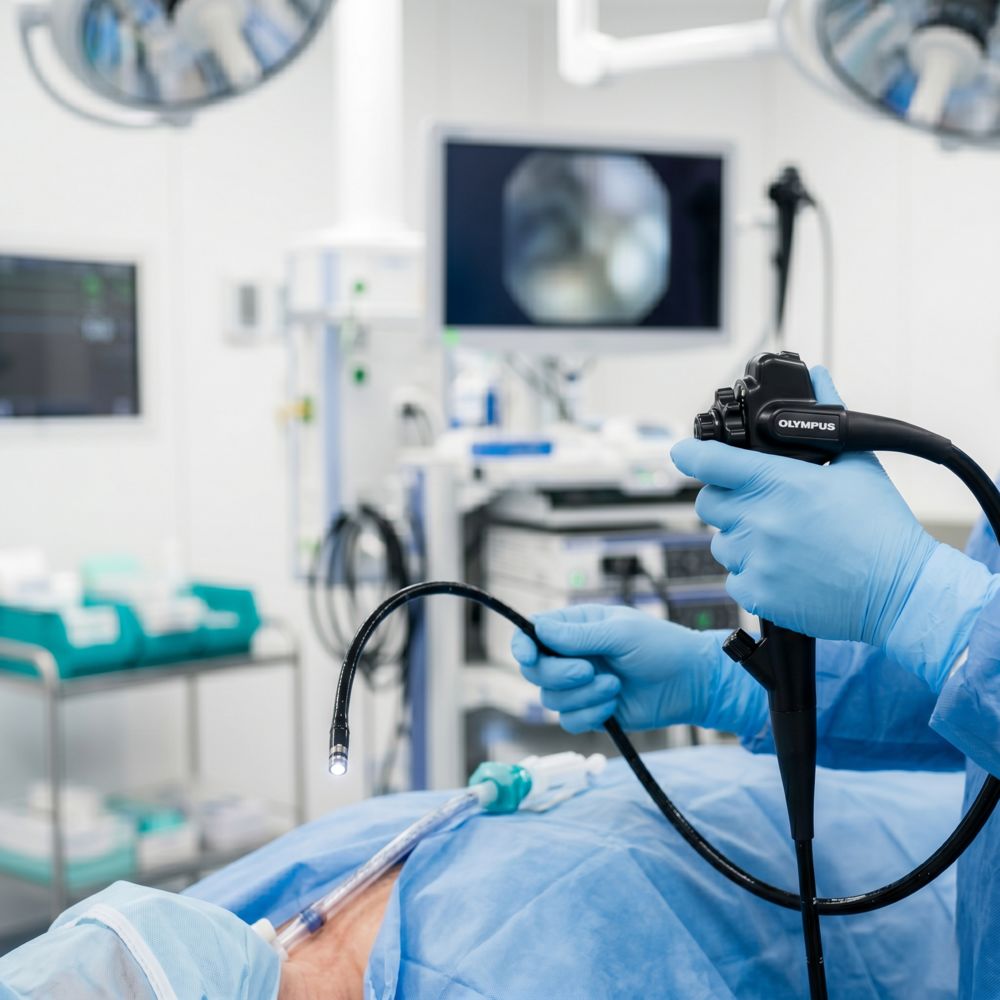
A successful lung transplant in the operating room is only the start. The bronchial anastomosis - the surgical join where the donor airway meets the recipient’s - depends initially on collateral blood supply from the pulmonary artery, with full bronchial circulation taking weeks to re-establish. I am Dr. Manjunath M Negigoudara, Transplant Pulmonologist at KIMS Hospital, Electronic City, Bengaluru, with a Fellowship in Interventional Pulmonology (FIP) from Manipal Hospitals - and airway management is one of the defining clinical skills of a mature lung transplant programme. This guide covers what airway complications look like, when they happen, and the graded interventional toolkit to manage them.
In short
Airway complications affect roughly 10-15% of lung transplant recipients per the ISHLT 2018 consensus report. Five complications dominate: anastomotic stenosis (the most common late complication), dehiscence, bronchomalacia, endobronchial infection, and granulation tissue. Management is a stepwise interventional pulmonology ladder: balloon dilatation first, cryotherapy for granulation, stents last. Most stenoses are managed without ever needing a stent. Dr. Manjunath M Negigoudara’s FIP training means these procedures happen in-house at KIMS Electronic City rather than being referred externally - continuity of care matters in transplant airway management.
Why is the transplanted airway vulnerable?
Understanding airway complications starts with understanding the physiology. Native bronchi have two blood supplies: the pulmonary artery (from the right heart) and the bronchial arteries (branches of the aorta). In a lung transplant, the bronchial artery circulation is not reconstructed - it depends on collateral vessels regrowing from the lung parenchyma over 2-6 weeks. During that window, the anastomotic tissue is relatively ischaemic, immunosuppressed, and exposed to any infection colonising the airway.
Add three amplifiers: bacterial and fungal colonisation is common because the transplanted lung is denervated (no cough reflex below the anastomosis), immunosuppression blunts local immunity, and any rejection episode further compromises tissue healing. These factors together explain why airway complications remain one of the defining problems of post-transplant care despite substantial improvements in surgical technique.
What are the five airway complications after transplant?
In transplant practice, five airway problems account for the vast majority of post-operative interventional pulmonology work. Per the ISHLT 2018 consensus and the ERR 2020 anastomotic complications review:
| Complication | Typical timing | Presentation | First-line management |
|---|---|---|---|
| Anastomotic stenosis | 2-6 months | FEV1 drop, dyspnoea, wheeze not responsive to bronchodilator | Balloon dilatation (2-3 sessions typically); cryotherapy for granulation |
| Anastomotic dehiscence | First 4 weeks | Pneumomediastinum, persistent air leak, pleural air-fluid level | Minor: conservative. Larger: covered stent to bridge defect while tissue heals |
| Bronchomalacia | 3-12 months | Cough, expiratory wheeze, dynamic airway collapse on bronchoscopy | NIV / CPAP trial first; silicone or hybrid stent if severe and refractory |
| Endobronchial infection | Any time (highest first 6 months) | Fever, sputum change, focal infection on imaging - often silent early | Bronchoscopy with BAL + biopsy; targeted antibiotics/antifungals |
| Granulation tissue / exophytic lesions | Weeks to months | Focal FEV1 drop, may see polypoid lesions at bronchoscopy | Cryotherapy (preferred over cautery in transplanted tissue) |
Anastomotic dehiscence
A partial breakdown of the surgical join, usually appearing in the first 4 weeks. Presents with pneumomediastinum, persistent air leak, or pleural air-fluid level. Minor dehiscence may heal on its own with conservative management; larger defects may need covered stenting to bridge the gap while the tissue heals. Dr. Manjunath M Negigoudara coordinates closely with the cardiothoracic surgical team when significant dehiscence occurs.
Anastomotic stenosis
The most common late complication, typically appearing 2-6 months after surgery. Granulation tissue, fibrosis, or ischaemic remodelling progressively narrow the airway. The patient may notice a drop in FEV1, new breathlessness on exertion, or wheeze that doesn’t respond to bronchodilators. Most cases respond well to a stepwise approach: balloon dilatation first, with cryotherapy or electrocautery for exuberant granulation, and stenting reserved for recurrent or resistant cases.
Bronchomalacia
Dynamic collapse of the airway, especially during forced expiration or cough. Often mistaken for asthma. Diagnosed at dynamic bronchoscopy with the patient awake at the end of the procedure or on expiratory CT. Treatment is more nuanced - some cases respond to non-invasive ventilation, others need a silicone or hybrid stent to maintain patency.
Endobronchial infection and colonisation
The transplanted lung is denervated and has no cough reflex below the anastomosis, which predisposes to bacterial colonisation (especially Pseudomonas, Staphylococcus aureus) and fungal overgrowth (Aspergillus, Candida). Surveillance bronchoscopy with bronchoalveolar lavage and biopsy is the only reliable way to detect and treat these early, often before symptoms appear. This is a major reason why surveillance bronchoscopy schedules matter.
Granulation tissue and exophytic lesions
Exuberant healing produces polyps and granulation tissue that can obstruct the lumen. Cryotherapy is the procedure of choice - per the Chest 2017 cryotherapy safety paper, it ablates the lesion with minimal collateral damage and produces cleaner re-epithelialisation than cautery in transplanted tissue.
How are post-transplant airway complications treated?
Modern interventional pulmonology gives us a graded set of techniques. The principle is simple: use the least invasive option that achieves a durable result. Dr. Manjunath M Negigoudara performs all of these in-house at KIMS Electronic City.
- Flexible bronchoscopy - the foundation. Used for diagnosis, biopsy, suction, lavage, and surveillance. Performed monthly or quarterly in the first year, more often if needed.
- Rigid bronchoscopy - the workhorse for therapeutic interventions. Provides a stable airway under general anaesthesia, allows simultaneous ventilation, and accommodates larger instruments. Essential for stenting, debulking, and managing major bleeding.
- Balloon dilatation - first line for symptomatic stenosis. A controlled-radial-force balloon is inflated across the narrowing for 60-90 seconds. Often needs 2-3 sessions but avoids the long-term issues of stents.
- Cryotherapy - freezes tissue rapidly to ablate granulation, polyps, mucus plugs, or blood clots. Preferred over cautery in transplant airways because it preserves the cartilaginous framework.
- Electrocautery and laser - reserved for cases where bleeding control matters or cryotherapy is insufficient. Used cautiously in transplanted tissue.
- Airway stenting - silicone (removable), self-expanding metallic (permanent or semi-permanent), or hybrid (uncovered metallic). The choice depends on lesion type, location, expected duration, and the patient’s overall trajectory.
Stents are powerful tools but each one introduces its own risks. The goal is always to leave the airway as close to its native geometry as possible.
Which airway stent is used, and why?
Per the Respiration 2018 comparative outcomes paper, the three main stent classes have distinct profiles:
| Stent type | Advantages | Disadvantages | Best for |
|---|---|---|---|
| Silicone (Dumon) | Removable, less granulation, well-tolerated long-term | Requires rigid bronchoscopy to place; risk of migration; mucus impaction more common | Benign stenosis expected to resolve; malacia in stable positioning |
| Self-expanding metallic (uncovered) | Placed via flexible bronchoscopy; integrates into airway wall; low migration risk | Very difficult to remove; granulation tissue growth through mesh; recommended only when permanent placement is acceptable | Malignant stenosis; refractory benign cases where removal not anticipated |
| Covered metallic / hybrid | Combines wall integration with barrier against granulation ingrowth; can seal dehiscence | Migration risk higher than uncovered; can obstruct segmental bronchi at edges | Dehiscence; recurrent stenosis where a temporary sealed barrier is needed |
Second opinions on post-transplant airway management
Difficult stent management, unclear bronchoscopy findings, or recurrent stenosis despite dilatation - Dr. Manjunath M Negigoudara accepts second-opinion referrals from other transplant centres. WhatsApp is the fastest way to share imaging and PFT trends for remote review before an in-person visit.
How is an airway stenosis managed?
A patient 3 months post-bilateral lung transplant reports a 200 mL drop in FEV1 over 4 weeks and new dyspnoea climbing stairs. CT shows nothing dramatic. Bronchoscopy reveals 60% narrowing of the right main bronchial anastomosis with surrounding granulation tissue.
The plan unfolds in three steps:
- First session: rigid bronchoscopy under general anaesthesia. Cryotherapy applied to the granulation tissue, followed by balloon dilatation to 12 mm. The patient goes home the same day. FEV1 recovers 150 mL over the next week.
- Re-evaluation at 4 weeks: partial recurrence. Second session of dilatation, lumen now stable at 10 mm.
- Re-evaluation at 3 months: stable, no recurrence. Surveillance continues every 6 months without further intervention.
Most stenoses are managed this way - without ever needing a stent. Stents are powerful tools but each one introduces its own risks: migration, granulation, mucus impaction, and the small but real risk of pressure necrosis. The goal is always to leave the airway as close to its native geometry as possible.
When does the airway need a stent?
Stenting becomes necessary when:
- The stenosis recurs within 4-6 weeks despite repeated dilatation
- The airway shows dynamic collapse (malacia) that does not respond to non-invasive ventilation
- There is dehiscence requiring a covered stent to bridge the defect
- There is extrinsic compression from a haematoma, abscess, or post-surgical fibrosis
A well-chosen stent in the right airway changes a patient’s trajectory dramatically. Dr. Manjunath M Negigoudara has patients walking out of the recovery room with FEV1 improved by 30% from a single procedure, returning to work the following week.
Why is surveillance bronchoscopy needed?
Most centres do surveillance bronchoscopy at fixed intervals after transplant - typically at 2-4 weeks, 3 months, 6 months, and 12 months, with transbronchial biopsy at each visit to screen for rejection. These are also chances to inspect the anastomosis, take cultures, treat early colonisation, and intervene on emerging stenosis before the patient becomes symptomatic.
Many of the airway problems we treat would have become serious if they were caught only when the patient noticed something. Surveillance is the cheapest, lowest-risk way to keep the graft healthy.
Why work with Dr. Manjunath M Negigoudara for airway interventions
Post-transplant airway management sits at the intersection of transplant pulmonology and interventional pulmonology. Most transplant pulmonologists refer these cases externally to interventional pulmonology teams. That fragments care.
Dr. Manjunath M Negigoudara’s Fellowship in Interventional Pulmonology (FIP) from Manipal Hospitals means the same clinician who manages the transplant medically also performs the bronchoscopy, cryotherapy, balloon dilatation, and stenting. There is no handoff to a separate team, no delay while a visiting specialist is scheduled, and no loss of clinical context. His training:
- MBBS (Gold Medalist) - Bangalore Medical College
- MD Pulmonary Medicine - JSS Medical College
- DNB Respiratory Medicine - National Board of Examinations
- FIP - Fellowship in Interventional Pulmonology - Manipal Hospitals
- Karnataka Medical Council Reg. No. 116911
He has personally managed 250+ lung transplant cases at KIMS Electronic City, where the KIMS Institute of Heart and Lung Transplant has completed 780+ thoracic transplants.
For related consultations:
- Best lung transplant doctor in Bangalore
- Transplant pulmonologist in Bangalore
- Life after lung transplant - year one and long-term care
- Who needs a lung transplant?
For referring physicians: when to involve interventional pulmonology
If a lung transplant patient under your care presents with any of the following, an early call helps:
- Unexplained FEV1 drop >10% from baseline
- New persistent cough or wheeze, especially focal to one side
- Recurrent infections in the same lobe or segment
- New stridor or noisy breathing
- Haemoptysis - even a small amount in a transplant patient is worth a bronchoscopy
Dr. Manjunath M Negigoudara accepts referrals for second-opinion bronchoscopy and for difficult-stent management. WhatsApp +91 79937 41199 is the fastest way for clinicians to reach him directly with imaging and pulmonary function trends.
Frequently asked questions
How common are airway complications after lung transplantation?
What is bronchial anastomotic stenosis?
When is a stent needed vs balloon dilatation alone?
What is the difference between silicone and metallic airway stents?
Are airway interventions painful?
How often will I need bronchoscopy after my transplant?
What is bronchomalacia and how is it different from stenosis?
What signs should make my regular pulmonologist refer me back for airway assessment?
Can airway problems be prevented?
What is the long-term outlook after a stent is placed?
What role does cryotherapy play in airway interventions?
How much do post-transplant airway interventions cost in India?
Medical disclaimer. This article is general information from Dr. Manjunath M Negigoudara’s clinical practice. It is not a substitute for an individual consultation. For specific advice about your condition, please schedule a consultation. For emergencies, call 108 (India) or go to your nearest emergency department.
Have a question about your case?
Talk directly with Dr. Manjunath M Negigoudara.
Consultations, second opinions and referrals are welcomed by phone or WhatsApp. Mon - Sat, 9am - 5pm at KIMS Electronic City.