
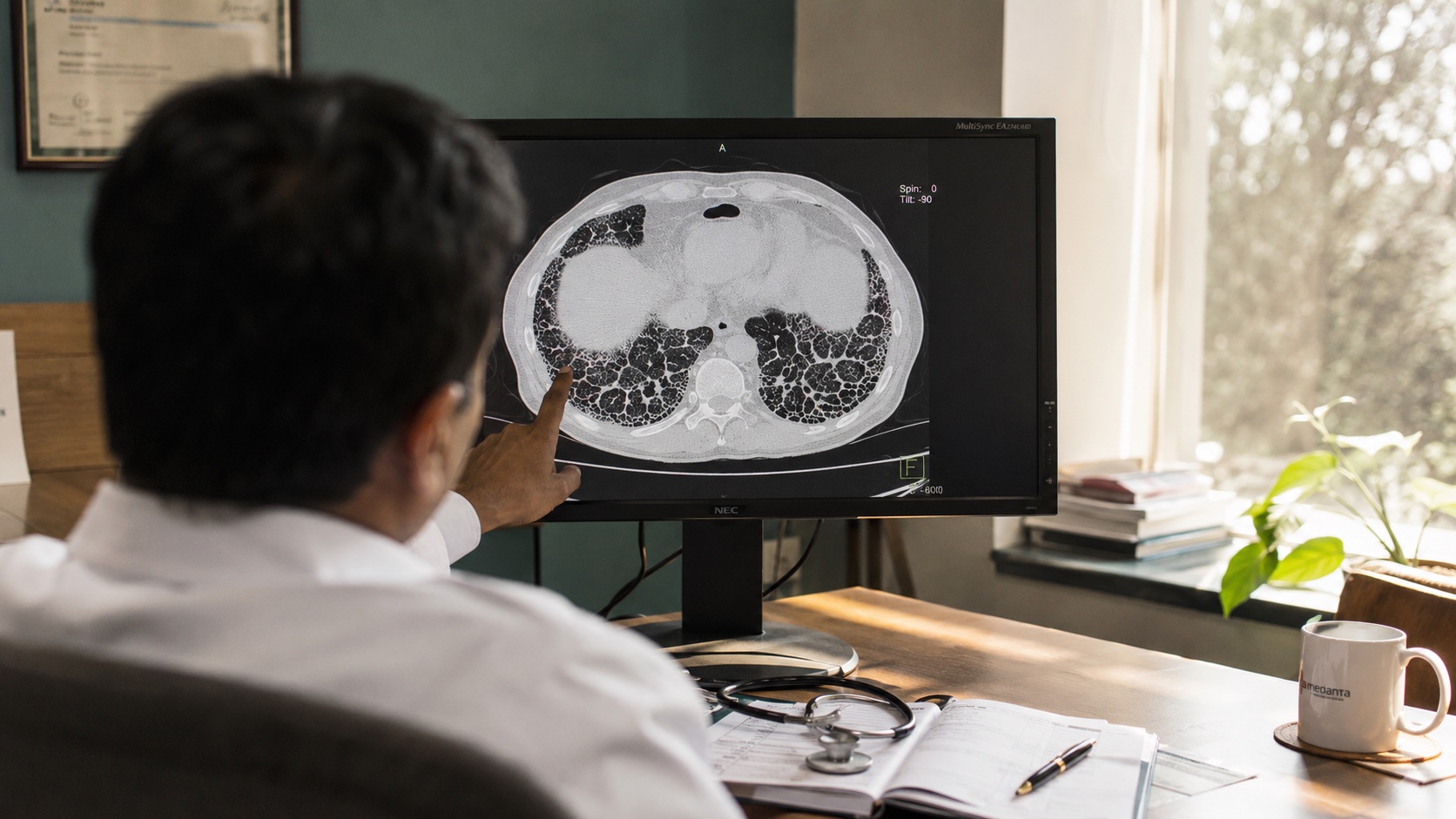
Pulmonary fibrosis is the diagnosis most families hear late. A CT report mentions “honeycombing in both lower lobes”. A doctor uses the word “fibrosis”. The patient goes home and searches life expectancy for pulmonary fibrosis. Two clinical weeks are lost. Meanwhile the disease keeps doing what it does. Every year on average, an untreated case of idiopathic pulmonary fibrosis loses about 150 to 200 millilitres of lung capacity - roughly the volume of a small cup of water. The drugs approved for it (nintedanib, pirfenidone) do not reverse that loss. They slow it. Which is exactly why the diagnosis and the decisions that follow are time-sensitive.
September is Pulmonary Fibrosis Awareness Month worldwide. In India that matters more than most awareness months, because pulmonary fibrosis here is systematically underdiagnosed - patients get labelled with tuberculosis, then with post-COVID lung damage, then with “old-age lung disease” before a HRCT is finally done and someone reads it properly. By that point the GAP score is often already Stage II or Stage III, and the transplant conversation, if it happens, happens hurriedly.
This guide is the clinician-written version of the conversation you should be having with a specialist right at the start. I am Dr. Manjunath M Negigoudara - a Transplant Pulmonologist at KIMS Hospital, Electronic City, Bengaluru. I run the Advanced Lung Failure and Lung Transplant Clinic as part of one of Asia’s largest thoracic transplant programmes and I have personally managed 250+ lung transplants, most of which arrived at our unit because the fibrosis was recognised too late somewhere else. Here is what I wish every patient with a fibrosis-suggestive CT read first.
In short
Pulmonary fibrosis is a group of scarring lung diseases; the commonest and most aggressive subtype is idiopathic pulmonary fibrosis (IPF). Diagnosis needs a HRCT chest plus PFT with DLCO plus (often) a multidisciplinary review. Two drugs are proven to slow it: nintedanib and pirfenidone. Rehabilitation, oxygen and vaccination matter. Lung transplant is the only intervention that replaces scarred lung, and referral thresholds are earlier than most families realise (FVC below 80% predicted, DLCO below 40% predicted, or a 10% FVC drop over 6 months). Dr. Manjunath M Negigoudara at KIMS Electronic City runs a structured pulmonary fibrosis assessment and, when it is time, a lung transplant programme in the same building.
Why September matters (Pulmonary Fibrosis Awareness Month)
September is Pulmonary Fibrosis Awareness Month in the global respiratory calendar. The blue awareness ribbon is worn on 6 September (Global PF Day). The reason it needs a month rather than a day is that pulmonary fibrosis is neither famous like cancer nor visibly disabling like paralysis in its early stages. Patients look well until they are not. They walk slowly, they climb one flight of stairs and stop, they say they are just getting older. Then one respiratory infection, and they end up in an intensive care unit needing oxygen at a level that a well-preserved lung would never need.
In India, awareness matters for four specific reasons:
- Diagnostic delay is measurable in years, not months. The prospective Indian ILD registry (Singh S et al., American Journal of Respiratory and Critical Care Medicine, 2017) enrolled 1,084 patients across 27 Indian centres and found a median symptom-to-diagnosis interval of 1 to 2 years, with many patients treated for tuberculosis first.
- Antifibrotic drugs are available in India - both nintedanib and pirfenidone are approved and generically manufactured - but a patient cannot be started on one until the diagnosis is made. Awareness compresses the delay between the first breathless episode and the first HRCT.
- Post-COVID has left a large cohort of patients with genuine but ambiguous lung findings who need to be sorted from patients with true progressive fibrotic ILD. That sorting is now a live everyday problem in Indian pulmonology clinics.
- Lung transplant capacity has grown quietly in India - KIMS Institute of Heart and Lung Transplant alone has completed 780+ thoracic transplants. Fibrosis patients who used to have no option now do have one, but only if referred in time.
So a piece written in September is not filler. It is aimed at the person who has just been handed a report, and the family Googling next to them. That is the point at which the odds can still be changed.
What pulmonary fibrosis actually is
A normal lung is architecturally like an elastic sponge with a very thin, very large surface area where oxygen crosses over into the bloodstream. The tissue immediately surrounding the air sacs (called the interstitium) is normally microscopically thin, so that oxygen has almost nothing to cross. Pulmonary fibrosis is the process where that interstitium progressively thickens with scar tissue. Two things happen as a result:
- Oxygen transfer worsens, because there is now a thicker barrier between the air sac and the capillary. This is measured as a reduced DLCO (diffusing capacity for carbon monoxide). It is usually the earliest measurable abnormality.
- Lung compliance falls, meaning the lung becomes stiffer and holds less air. This is measured as a reduced total lung capacity and, on spirometry, a restrictive pattern with a reduced FVC (forced vital capacity).
Patients feel this as breathlessness that starts on exertion (climbing stairs, walking uphill) and progresses over months to years to breathlessness at rest. A dry, hacking cough is frequent. Fingernails may develop clubbing, a bulbous enlargement of the fingertips that is a physical-examination clue for chronic lung or heart disease.
“Pulmonary fibrosis” is an umbrella term. What sits under the umbrella determines everything about prognosis and treatment.
IPF vs non-IPF fibrosis - the single most important call
Idiopathic pulmonary fibrosis (IPF) is fibrosis with no identifiable cause and a specific HRCT pattern called usual interstitial pneumonia (UIP): honeycombing and reticulation predominantly in the lower and peripheral parts of the lung, traction bronchiectasis, with an absence of features that would suggest another diagnosis. IPF behaves aggressively - median survival from diagnosis, historically, was 3 to 5 years - and its only proven pharmacological options are antifibrotic drugs.
Non-IPF fibrosing ILD is fibrosis where a cause can be identified. The commonest identifiable causes are:
- Connective-tissue disease (rheumatoid arthritis, systemic sclerosis / scleroderma, myositis, Sjogren’s syndrome, mixed connective tissue disease)
- Hypersensitivity pneumonitis (immune reaction to inhaled antigens - birds, mould, damp indoor spaces, occupational exposures)
- Drug-induced (methotrexate, amiodarone, nitrofurantoin, bleomycin, some chemotherapies, some biologics)
- Radiation-induced (after chest radiotherapy for breast or lung cancer)
- Environmental/occupational (asbestos, silica, coal dust, metal fumes)
- Sarcoidosis in its fibrotic end-stage
- Fibrosis following severe COVID pneumonia (see the post-COVID lung damage guide for the honest current picture)
The reason this distinction is the most important call a specialist makes is that treatment strategy differs: in IPF, the plan is antifibrotic therapy plus supportive care plus early transplant discussion; in non-IPF fibrosis, the plan is treat the underlying cause first (immunosuppression for autoimmune, antigen removal for hypersensitivity, stop the offending drug), and add antifibrotic therapy if the fibrosis continues to progress despite that. The INBUILD trial (NEJM 2019) established that nintedanib slows decline even in this non-IPF progressive fibrosing group.
The seven documented causes of pulmonary fibrosis
When a patient asks me “what caused my fibrosis?”, the answer is either “we do not know, and by definition when we do not know we call it idiopathic”, or it is one of seven documented categories. Here they are in the frequency order I see in the Indian practice at KIMS Electronic City:
| Category | Typical trigger | What it changes about management |
|---|---|---|
| 1. Idiopathic (IPF) | No identifiable cause. Age >60, male, smoking history, family history in 5%. | Antifibrotic drug plus early transplant discussion. |
| 2. Connective-tissue disease | Scleroderma, rheumatoid arthritis, myositis, Sjogren’s. | Immunosuppression is often first-line. Antifibrotic added if progressive. |
| 3. Post-COVID fibrotic changes | Severe COVID pneumonia, especially those who needed ICU / ventilator. | Most resolve; watchful waiting with serial PFT and HRCT. Antifibrotic reserved for the small subset with honeycombing and progressive decline. |
| 4. Hypersensitivity pneumonitis | Exposure to birds (parrots, pigeons), damp indoor mould, hay, hot tubs, occupational dust. | Antigen removal is the single most effective intervention. Steroids for active inflammation. Antifibrotic if fibrosis is established. |
| 5. Drug-induced | Methotrexate, amiodarone, nitrofurantoin, bleomycin, checkpoint inhibitors, some chemotherapies. | Stop the drug. Steroids for inflammatory phase. Fibrotic residue may need antifibrotic therapy. |
| 6. Occupational / environmental | Asbestos (shipyard, construction), silica (stone-cutting, sand-blasting), coal dust, metal fumes. | Exposure control. Compensation-medical-board documentation. Antifibrotic for progressive cases. |
| 7. Post-radiation / post-infection sequelae | Chest radiotherapy, severe pneumonia, prior tuberculosis with destroyed-lung sequelae. | Rehabilitation, oxygen, treat superimposed infections. In tuberculosis-destroyed lung with FEV1 <30%, discuss transplant. |
In Indian pulmonology practice, the two categories that get missed most often are hypersensitivity pneumonitis (because nobody asks about birds, damp houses or occupational exposure) and drug-induced fibrosis (because the drug that is causing the problem was prescribed by a specialist for something else). A specialist history is the single most valuable tool in this space, ahead of the CT.
Symptoms that should not be ignored
Pulmonary fibrosis is famous for being silent until it isn’t. Here are the six symptom-patterns that should prompt a specialist visit, ranked by how commonly they turn out to be fibrosis in my clinic:
- Progressive breathlessness on exertion, over months to years. Not sudden. Not one bad chest infection you never quite recovered from. A slow, insidious loss of exercise tolerance, where the patient can point to a definite step down from what they could do six months ago.
- A dry, hacking cough that does not go away. Not productive of sputum, not infective. Cough drops, antihistamines and antibiotics do not help. It is often the first symptom, mistaken for allergy.
- Velcro crackles on chest examination. Doctor puts the stethoscope on the lower back of your chest and listens to you breathe in. Fine crackles that sound like Velcro being pulled apart are almost pathognomonic for fibrosis in the right clinical setting.
- Finger clubbing. The fingertips become bulbous and the nail curls over the fingertip. Look sideways along the finger - if the natural angle between the nail base and the finger is gone, that is clubbing. It is a physical sign of chronic hypoxia and, on its own, warrants a HRCT.
- Oxygen saturation drops on exertion. Resting SpO2 may be 96%. Walk them around the corridor with a pulse oximeter and it drops to 88%. This is called exertional desaturation and it is missed by every clinic that only checks oxygen sitting still.
- Unexplained weight loss and fatigue in a person over 55, with a smoking or occupational history. Often attributed to age. Sometimes it is early IPF.
See a pulmonologist urgently if
You have progressive breathlessness plus finger clubbing plus a dry cough, and you have not had a HRCT chest and PFT with DLCO. Also urgently: any breathlessness with a resting SpO2 below 92%, any breathlessness with visible blueness of lips or fingertips, breathlessness that has worsened in the last 2 weeks, or coughing up blood.
How pulmonary fibrosis is diagnosed
The diagnosis of pulmonary fibrosis is made on the combined weight of history, examination, imaging and lung function - reviewed together by a specialist team. There is no single test. Getting one part right (a CT scan) and ignoring the others is where most misdiagnosis happens.
1. High-resolution CT (HRCT) chest
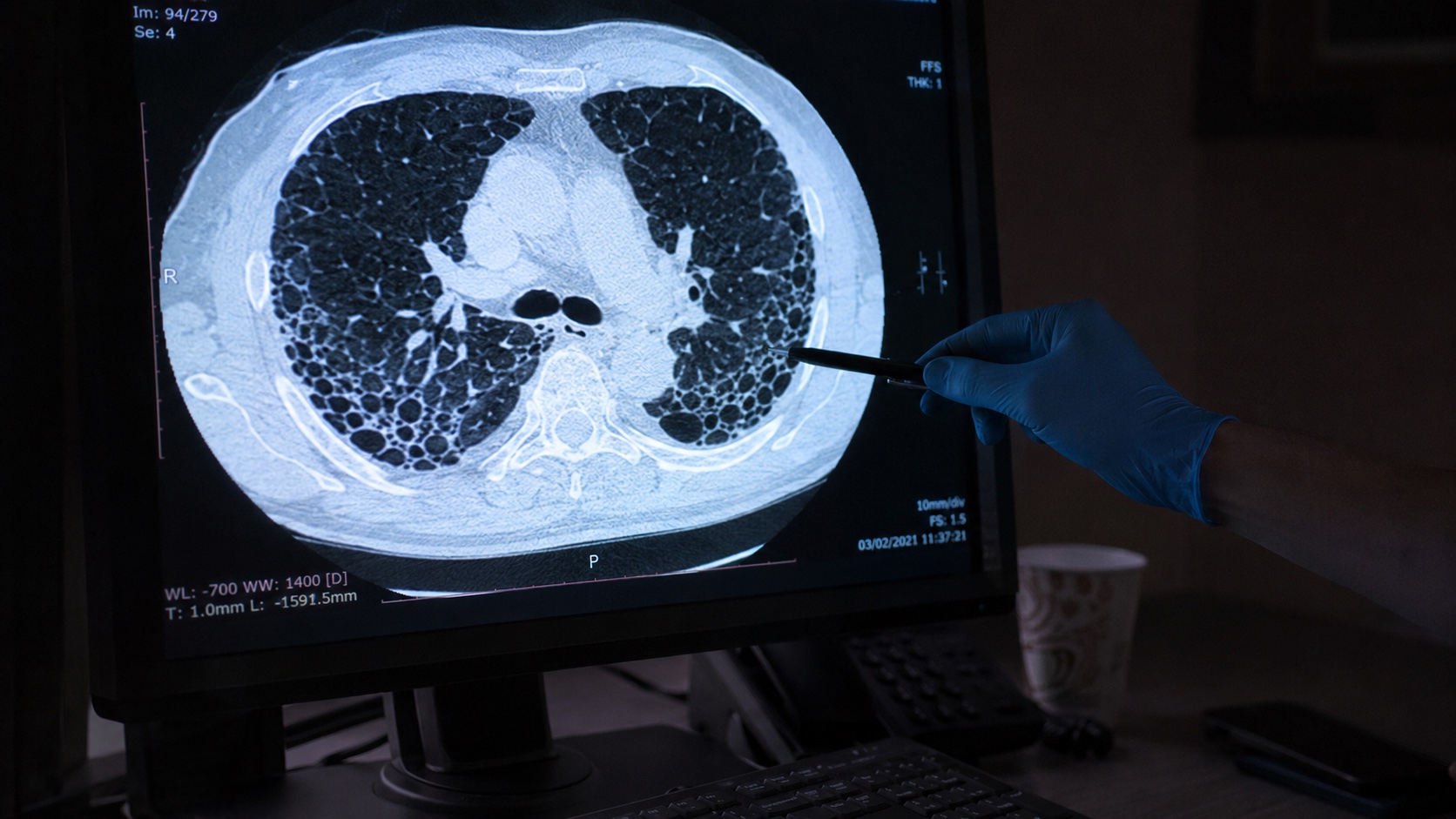
The single most important test. Ordinary CT is not adequate. HRCT protocols use thin slices (typically 1 mm) and specific reconstruction algorithms that resolve the fine detail of the lung interstitium. HRCT should be requested by a pulmonologist and reported by a radiologist familiar with ILD patterns.
On HRCT, the pattern usual interstitial pneumonia (UIP) is diagnostic of IPF in the right clinical setting: honeycombing (small clustered cystic spaces) predominantly in the lower lobes and periphery, traction bronchiectasis (airways pulled open by surrounding scar), reticulation, and an absence of features that would suggest another diagnosis. If UIP is present on HRCT and the history is consistent, a lung biopsy is not required.
2. Pulmonary function tests with DLCO
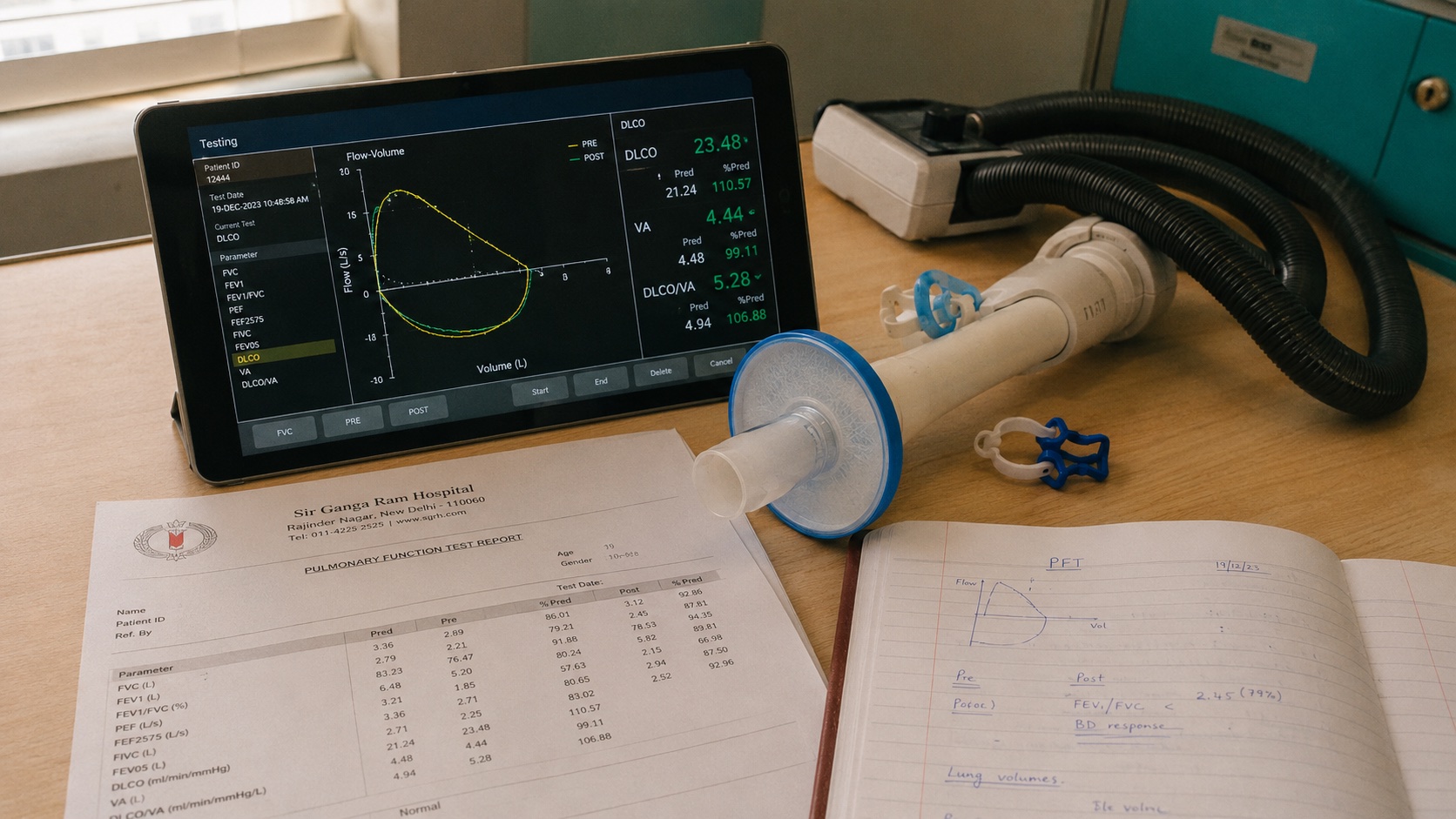
PFT alone is not enough. PFT with DLCO is the standard. In fibrosis, the typical pattern is restrictive (reduced FVC, reduced total lung capacity, preserved FEV1/FVC ratio) with reduced DLCO. DLCO is often the first value to become abnormal, sometimes before spirometry changes. Serial PFT with DLCO (typically every 3-6 months) is how progression is tracked - a 10% or greater fall in FVC or 15% or greater fall in DLCO over 6 months is a significant progression that changes management.
3. Six-minute walk test with oximetry
Cheap, tells you a lot. The patient walks up and down a corridor for six minutes; distance covered, pre- and post-oxygen saturation, and Borg breathlessness score are recorded. A 6-minute walk distance below 250 metres, or a fall in saturation of 4% or more, is one of the strongest single predictors of survival in IPF and is one of the ISHLT triggers to consider transplant referral.
4. Blood tests
To look for treatable, secondary causes. ANA, RF, anti-CCP, anti-Scl-70, anti-Jo-1, myositis panel to screen for connective-tissue disease. Precipitin panel for hypersensitivity pneumonitis. HIV, hepatitis serology. Full blood count, renal and liver profile. Sometimes a BNP or NT-proBNP for cardiac causes of breathlessness.
5. Multidisciplinary team (MDT) review
International guidelines recommend that any pulmonary fibrosis diagnosis - especially IPF - should be reviewed by a multidisciplinary team including a chest physician, a chest radiologist and, where relevant, a lung pathologist. This is because pattern recognition on HRCT is genuinely difficult and MDT review has been shown to change diagnosis in about a quarter of cases. At tertiary programmes like KIMS Electronic City, MDT review is standard practice.
6. Lung biopsy (only when HRCT is not diagnostic)
If HRCT does not show a definite UIP pattern and the MDT cannot reach consensus, a lung tissue sample may be needed. Options range from bronchoscopic transbronchial cryobiopsy (safer, smaller sample) to surgical lung biopsy (larger, more definitive, more invasive). The decision is individualised: elderly patients, patients with reduced lung function, and patients on oxygen are usually managed without biopsy.
Getting a second opinion on a pulmonary fibrosis diagnosis
If you have been told you have pulmonary fibrosis at another hospital, a second opinion is worth doing before committing to antifibrotic therapy or accepting a poor prognosis. HRCT pattern recognition is genuinely difficult and international guidelines specifically recommend multidisciplinary review because pattern reassessment changes the diagnosis in about a quarter of cases. Dr. Manjunath M Negigoudara offers second-opinion consultations at KIMS Electronic City in person, or by video for patients outside Bengaluru, or as a remote report review for international patients before they travel. WhatsApp your HRCT, PFT with DLCO, echocardiogram and current medication list to +91 79937 41199 for pre-review, or book a consultation.
The GAP index - a clinician’s framework for prognosis
Once IPF is diagnosed, the next question every patient asks is “how long?”. The most validated way to answer that is the GAP index - Gender, Age, Physiology - developed by Brett Ley and colleagues and published in the Annals of Internal Medicine in 2012. It combines four variables that any specialist clinic will have on the first visit.
| Variable | Points |
|---|---|
| Gender: Female | 0 |
| Gender: Male | 1 |
| Age 60 or under | 0 |
| Age 61 to 65 | 1 |
| Age over 65 | 2 |
| FVC over 75% predicted | 0 |
| FVC 50 to 75% predicted | 1 |
| FVC below 50% predicted | 2 |
| DLCO over 55% predicted | 0 |
| DLCO 36 to 55% predicted | 1 |
| DLCO 35% or less predicted | 2 |
| DLCO unable to perform (usually because too breathless) | 3 |
Add the points. Total score determines stage and median survival:
| Total points | GAP stage | Median survival (untreated historical data) |
|---|---|---|
| 0 to 3 | Stage I | ~5 years |
| 4 to 5 | Stage II | ~4 years |
| 6 to 8 | Stage III | ~2 years |
Source: Ley B et al., Annals of Internal Medicine, 2012. These are pre-antifibrotic-era figures; modern figures with treatment are meaningfully better.
Two important things about the GAP index. First, it is a starting estimate - patients do far better or worse than the median. Second, it was validated in the pre-antifibrotic era. Patients started on nintedanib or pirfenidone at the point of diagnosis do meaningfully better than these numbers, particularly at Stage I and Stage II, because the drugs slow the loss of lung function that drives the natural decline. What the GAP index still does very well is identify patients who need a transplant conversation now, and patients who have time.

The GAP index is not a sentence. It is a starting map. What changes the map is the therapy started early, the rehabilitation done properly, and the transplant conversation begun before the numbers are too far gone.
Antifibrotic therapy - pirfenidone vs nintedanib in India (2026)
For decades there was no drug that slowed IPF. That changed in 2014, when the INPULSIS trials (nintedanib, published in NEJM) and the ASCEND trial (pirfenidone, published in NEJM) both reported clear reductions in the annual rate of lung function decline. Both drugs were subsequently approved worldwide, including in India. In 2019, the INBUILD trial (NEJM) extended the indication for nintedanib to non-IPF progressive fibrosing ILDs. This is the most important recent development in ILD care.
| Nintedanib (Ofev) | Pirfenidone (Esbriet, generics) | |
|---|---|---|
| Mechanism | Tyrosine kinase inhibitor (blocks PDGFR, FGFR, VEGFR). | Antifibrotic, anti-inflammatory (exact mechanism debated). |
| Approved indications | IPF, systemic sclerosis-associated ILD, other progressive fibrosing ILDs (INBUILD). | IPF. |
| Dose | 150 mg twice a day (with food). 100 mg twice daily if side effects. | 801 mg (three capsules) three times a day, with food. Titrated up over 2 weeks. |
| Trial result (annual FVC decline) | INPULSIS-1: 114 mL vs 240 mL placebo. INPULSIS-2: 114 mL vs 207 mL placebo. Roughly 50% reduction in decline. | ASCEND: 235 mL vs 428 mL placebo. Roughly 45% reduction in decline. Reduction in 10% FVC decline events. |
| Commonest side effects | Diarrhoea (up to 60% - usually manageable with loperamide and dose reduction). Nausea. Abnormal LFTs. | GI upset (nausea, dyspepsia). Photosensitivity rash (mandatory strong sunscreen + covered clothing outdoors). Abnormal LFTs. Rarely, hepatotoxicity. |
| Monitoring | LFTs every month for 3 months, then every 3 months. | LFTs every month for 6 months, then every 3 months. |
| Indicative monthly cost in India (2026) | ₹ 30,000 - 40,000 for branded Ofev; generic options emerging. | ₹ 18,000 - 25,000 for Esbriet or generic pirfenidone. |
| When it is preferred | Non-IPF progressive fibrosing ILD (only approved option). Patient does outdoor work (photosensitivity of pirfenidone is problematic). | Patient prone to GI symptoms or on other drugs that worsen diarrhoea. Cost pressure. |
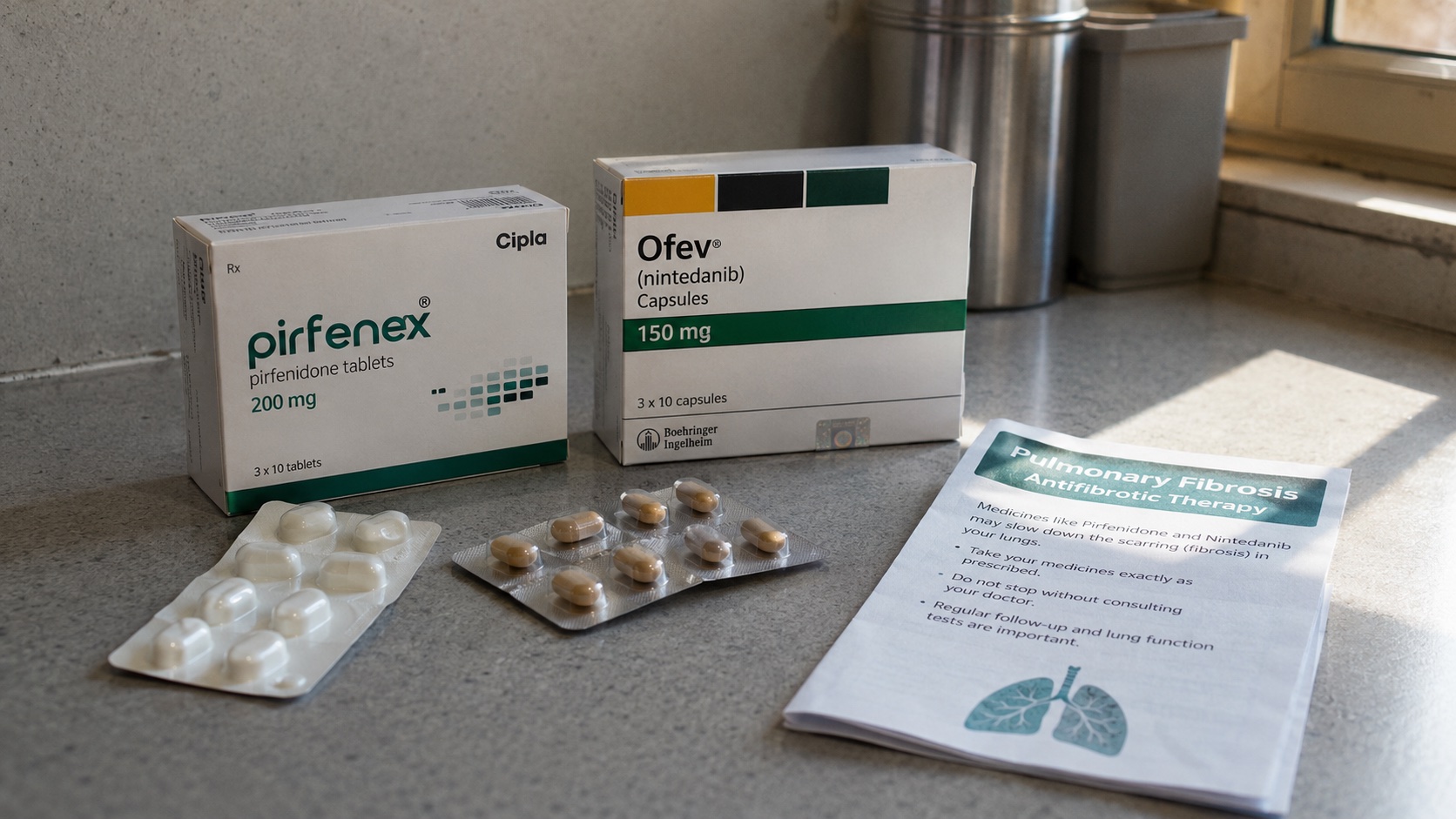
Neither drug is superior for a given patient. In practice, tolerability, comorbidities, other medicines and cost make the choice. Whichever is chosen, the key is consistent daily use. Both drugs deliver their benefit by slowing decline year on year - stopping and restarting them intermittently, or reducing them below the trial dose because of tolerable side effects, gives away most of the benefit.
Antifibrotic therapy does not reverse fibrosis. It slows further scarring. Patients whose lung function is stable on it are winning - that is the goal - even though it feels like nothing is happening.
Important clarification
Antifibrotic drugs are not the answer for every “fibrosis” on a CT report. For post-COVID ground-glass opacity without honeycombing, they do not beat placebo (see the post-COVID lung damage guide). For active hypersensitivity pneumonitis, removing the antigen matters more. For connective-tissue-disease ILD, immunosuppression is first-line. The value of a specialist review is that the right treatment ladder gets applied, not just the newest drug.
If your CT report mentions fibrosis
Get a structured pulmonary fibrosis assessment before deciding on any drug
Dr. Manjunath M Negigoudara at KIMS Hospital, Electronic City runs a structured assessment for anyone whose CT or PFT is suggestive of pulmonary fibrosis. Everything - HRCT review, PFT with DLCO, 6-minute walk test, autoimmune screen, MDT discussion, treatment plan - happens in the same building with the same team. If lung transplant becomes part of the conversation later, it is a continuation of the same relationship, not a referral out.
- Same-day PFT with DLCO on request
- HRCT review with ILD-experienced radiologist
- Antifibrotic decision by MDT, not by one doctor
- Direct pathway to KIMS transplant unit if needed
Pulmonary rehabilitation, oxygen and supportive care
Drugs are one axis. Supportive care is the other, and in most weeks it delivers more day-to-day improvement than the drug does.
Pulmonary rehabilitation
A supervised, progressively loaded exercise programme, ideally 6 to 12 weeks, twice or thrice a week under a physiotherapist trained in respiratory rehabilitation. It reliably improves 6-minute walk distance and quality of life scores in pulmonary fibrosis, and it is safe. It is underused in India because access to structured programmes is patchy. Where a supervised programme is not accessible, a written home programme with monthly reviews is the second best option.
Ambulatory oxygen therapy
For patients who desaturate on exertion, portable oxygen concentrators (POC) or lightweight cylinders let them stay active, prevent pulmonary hypertension developing on top of the fibrosis, and preserve independence. Long-term oxygen (over 15 hours a day) is prescribed when resting oxygen sits below 88% at rest. Oxygen prescriptions should specify the flow rate at rest, on exertion, and during sleep - a common Indian prescription error is a single default flow that then does not cover exertion.
Vaccinations
Annual influenza vaccine, pneumococcal vaccination (both PCV and PPSV as per current guidelines), COVID vaccination up to date, RSV vaccination in eligible older adults. A single chest infection can push a stable fibrosis patient into respiratory failure - vaccines are the cheapest way to prevent that.
Reflux management
Gastro-oesophageal reflux is more common in IPF and there is observational data linking aggressive reflux control to slower fibrosis progression. Proton pump inhibitors, lifestyle measures (weight loss, avoiding late meals, elevating the head of the bed) are all worth addressing.
Managing depression, sleep and cachexia
Fibrosis patients often become depressed - a diagnosis of a progressive lung disease alongside the loss of physical function is a lot to absorb. Screening for depression, referral to counselling, and treatment where appropriate improves engagement with rehabilitation and medication adherence. Sleep-disordered breathing is common and worth investigating with an overnight oximetry or, when needed, a polysomnography study (a subspecialty that Dr. Manjunath M Negigoudara also practices at KIMS).
When lung transplant becomes the answer
Lung transplant is the only intervention that replaces scarred lung tissue. It is not a first-line treatment - it is the option for patients whose disease has progressed despite good medical management, who are otherwise well enough to survive a major surgery and lifelong immunosuppression, and who have a caregiver structure that can support the post-transplant regime.
The 2021 ISHLT candidate selection consensus (published in the Journal of Heart and Lung Transplantation) provides the internationally accepted referral thresholds. Referral is not listing - referral is the point at which a transplant pulmonologist becomes involved in the case, ideally while there is still time to do proper evaluation.
ISHLT 2021 - refer any patient with pulmonary fibrosis who has any of the following
Histopathologic or radiographic evidence of usual interstitial pneumonia (UIP) or fibrotic NSIP, regardless of lung function. FVC below 80% predicted. DLCO below 40% predicted. Any dyspnoea or functional limitation attributable to lung disease. Any oxygen requirement, even if only during exertion. Failure to improve dyspnoea, oxygen requirement, or lung function after clinically indicated medical therapy.
Additional considerations for listing (as opposed to referral) include:
- A 10% or greater fall in FVC over 6 months of follow-up
- A 15% or greater fall in DLCO over 6 months
- A 6-minute walk distance below 250 metres, or a fall in 6-minute walk distance greater than 50 metres over 6 months
- Exertional oxygen desaturation to below 88%
- Pulmonary hypertension on echocardiography or right heart catheterisation
- Hospitalisation for respiratory decline, pneumothorax, or acute exacerbation
In IPF specifically, the natural history includes acute exacerbations - abrupt worsening of breathlessness and hypoxia over days to weeks, with new ground-glass changes on CT superimposed on the underlying fibrotic pattern. Mortality of an acute exacerbation is high - a listed patient who survives one gets prioritised on the waiting list. An unlisted patient who has one often does not survive to be listed.
For the full transplant candidacy framework across all diseases, including contraindications (absolute and relative) and the evaluation itself, see the companion guide who needs a lung transplant. For the financial picture at KIMS Electronic City specifically, see lung transplant cost in India.
What survival looks like after transplant
The ISHLT International Thoracic Organ Transplant Registry (the global reference for lung transplant outcomes) reports the following median survival figures for adult lung transplant recipients:
| Time from transplant | Global survival (ISHLT registry) |
|---|---|
| 1 year | ~ 85% |
| 3 years | ~ 65% |
| 5 years | ~ 55% |
| 10 years | ~ 32% |
High-volume, experienced programmes tend to sit at the upper end of these ranges. Source: ISHLT Registry, adult lung transplant reports.
For a patient with GAP Stage III IPF and a 2-year median survival on medical therapy alone, transplant meaningfully changes the numbers. That is why the timing of the transplant conversation matters as much as the timing of the antifibrotic drug.
Cost of pulmonary fibrosis treatment in India
Total cost depends heavily on which treatment ladder rung a given patient sits on. The following is an indicative breakdown at KIMS Electronic City (2026 rates).
| Item | Indicative cost (2026) | Notes |
|---|---|---|
| HRCT chest | ₹ 4,000 - 8,000 | Once, at diagnosis. Repeat every 12-18 months if stable, sooner if progressive. |
| PFT with DLCO | ₹ 2,000 - 4,000 | At diagnosis, then every 3-6 months for monitoring. |
| 6-minute walk test | ₹ 500 - 1,500 | Every 3-6 months. |
| Specialist consultation | ₹ 800 - 2,000 | Per visit; typically every 3-6 months. |
| Nintedanib (Ofev) | ₹ 30,000 - 40,000 / month | Continuous. Some insurance covers as chronic condition. |
| Pirfenidone (generics) | ₹ 18,000 - 25,000 / month | Continuous. Generic pricing has fallen meaningfully in the last 3 years. |
| Pulmonary rehabilitation programme | ₹ 15,000 - 30,000 | 6-12 week supervised course. High-value one-time investment. |
| Ambulatory oxygen concentrator (POC) | ₹ 1,20,000 - 3,00,000 | One-time purchase; rental options available. |
| Lung transplant package - KIMS Electronic City | ₹ 36,00,000 | Private-ward package, 14 days ICU + 7 days private room. See cost article for exclusions. |
A typical pulmonary fibrosis year for a patient on antifibrotic therapy who is stable will cost in the range of ₹ 3 lakh to ₹ 5 lakh (all-in), most of which is the drug. If transplant enters the picture, the cost picture shifts to the transplant guide and the financing playbook.
Under Section 80DDB of the Income Tax Act, patients with certain specified diseases including chronic renal failure and full-blown neurological conditions can claim a deduction up to ₹ 40,000 per year (₹ 1,00,000 for senior citizens) for treatment costs. The list is narrow and the eligibility of specific ILDs varies year to year - discuss with a chartered accountant familiar with medical deductions.
Health insurance and pulmonary fibrosis in India
Pulmonary fibrosis is generally covered under a standard indemnity health insurance policy as a chronic respiratory condition, subject to waiting periods (typically 24 to 48 months for pre-existing conditions), sub-limits (room-rent and procedure caps), and post-hospitalisation windows (60 to 90 days for follow-up). Antifibrotic therapy (nintedanib, pirfenidone) is generally NOT covered as OPD unless the policy has a specific OPD or chronic-care rider. Inpatient management of an acute exacerbation, oxygen therapy hospitalisation, and lung transplant surgery itself are covered under most comprehensive indemnity policies with adequate sum insured. Corporate group policies and individual retail policies can be used in sequence (coordination of benefits) to raise total effective cover. For the full financing playbook including personal loans, healthcare EMI cards, CSR, and crowdfunding, see the lung transplant financing guide.
For patients from Bangalore, across India, and abroad
Pulmonary fibrosis care at KIMS Hospital, Electronic City is set up for three concentric circles of patients, and the evaluation workflow adapts to which circle you fall into. The clinical decision-making is the same everywhere - the difference is logistics.
For patients in Bangalore
Dr. Manjunath M Negigoudara consults at KIMS Hospital, Electronic City, Survey No. 37 & 38, PES University EC Campus, Hosur Road, Konappana Agrahara, Bengaluru 560100. The location is roughly 15 minutes off Silk Board junction via the Electronic City elevated expressway, and directly accessible from Whitefield, Marathahalli, HSR Layout, Koramangala, Jayanagar, JP Nagar, Bommanahalli, Sarjapur Road and central Bengaluru. Consulting hours are Monday to Saturday, 9 AM to 5 PM IST. HRCT chest, PFT with DLCO and 6-minute walk test can typically be scheduled on the same visit day for a first consultation - call or WhatsApp +91 79937 41199 to plan. See also the best lung transplant doctor in Bangalore page for the transplant-side workflow at KIMS.
For patients from other parts of India
Dr. Manjunath M Negigoudara sees pulmonary fibrosis patients travelling from across Karnataka - Mysuru, Mangaluru, Hubballi-Dharwad, Belagavi, Kalaburagi, Shivamogga, Tumakuru, Davangere, Ballari - and from the neighbouring states of Tamil Nadu (Chennai, Coimbatore, Madurai, Tiruchirappalli), Andhra Pradesh (Vijayawada, Visakhapatnam, Tirupati, Guntur), Telangana (Hyderabad, Warangal), Kerala (Kochi, Thiruvananthapuram, Kozhikode, Kannur) and Goa. Patients also travel from Maharashtra (Mumbai, Pune, Nagpur), Gujarat (Ahmedabad, Surat), Delhi NCR, Kolkata, Bhubaneswar, Guwahati, Chandigarh, Lucknow and the North-Eastern states. Kempegowda International Airport (BLR) is about 45 km from KIMS Electronic City and directly connected to 20+ Indian cities.
For patients outside Bengaluru, the workflow typically starts with a remote pre-arrival review. WhatsApp your HRCT chest, PFT with DLCO, echocardiogram, blood work, and current medication list to +91 79937 41199. Dr. Manjunath M Negigoudara personally reviews the images and reports before your arrival, so a single-day or two-day visit is usually enough for a definitive plan, and repeat travel is avoided where possible. Where onward transplant work-up is needed, the sequence is scheduled so as much as possible happens in one visit.
For international patients (medical travel)
Dr. Manjunath M Negigoudara sees pulmonary fibrosis and lung transplant patients travelling from the SAARC region (Bangladesh, Nepal, Sri Lanka, Maldives, Bhutan), the Middle East (Oman, UAE, Saudi Arabia, Iraq, Yemen, Kuwait, Bahrain, Qatar), East Africa (Kenya, Tanzania, Ethiopia, Uganda, Rwanda, Sudan), West Africa (Nigeria, Ghana) and Southeast Asia (Myanmar, Indonesia, Malaysia). India offers antifibrotic therapy and, where indicated, lung transplantation at a fraction of the cost of equivalent Western programmes, with outcomes at high-volume Indian centres matched to international standards (ISHLT registry).
The international-patient workflow at KIMS Electronic City is:
- WhatsApp HRCT + PFT with DLCO + echocardiogram + clinical summary to +91 79937 41199 for pre-arrival clinical opinion by Dr. Manjunath M Negigoudara.
- Written medical opinion issued for medical visa application to the Indian embassy or consulate in your country.
- Travel scheduled and airport transfer + accommodation coordinated through the hospital’s international patient services team.
- Three to four day evaluation visit at KIMS Electronic City - imaging repeat where needed, PFT, 6MWT, echocardiogram, autoimmune screen, right-heart catheterisation if pulmonary hypertension suspected, transplant candidacy workup if indicated.
- Treatment plan issued in writing - medical therapy protocol, follow-up schedule, and (if applicable) transplant listing pathway with KIMS financial counselling.
- Post-return follow-up via structured video consultation at 4, 12 and 24 weeks, then quarterly.
For an international patient enquiry, WhatsApp +91 79937 41199 with your reports in advance so the first reply is a clinical opinion, not a triage question.
When to see a transplant pulmonologist, not just a chest physician
A general chest physician can and should manage most patients with stable pulmonary fibrosis on medical therapy. The reason to see a transplant pulmonologist (a chest physician with additional training in lung transplantation) is different and specific.
You should see a transplant pulmonologist if:
- Your CT shows honeycombing and traction bronchiectasis (UIP or probable-UIP pattern), regardless of how well you feel
- Your FVC is below 80% predicted, or your DLCO is below 40% predicted
- You are already on antifibrotic therapy and your PFT is still declining
- You have had any episode of respiratory hospitalisation, acute exacerbation, or new oxygen requirement
- Your consultant has mentioned transplant as an option and you want a second opinion from a specialist who runs a transplant programme
- You are under 65, or over 65 but functionally excellent, and want your options mapped early
What a transplant pulmonologist adds is not a different antifibrotic prescription - it is tempo. When to accelerate the evaluation. When to add a second drug. When to refer for listing. When to start ECMO discussion. Those calls are the value.
Dr. Manjunath M Negigoudara has managed 250+ lung transplants personally, within the KIMS Institute of Heart and Lung Transplant, which has completed 780+ thoracic transplants - one of the largest thoracic transplant programmes in Asia. If your family has been told “pulmonary fibrosis”, the value of a single consult now is to know what category you are in and what the next 12 months should look like.
The awareness-month summary
Pulmonary fibrosis is a scarring lung disease that presents late, is often called something else first, and has real treatments if identified in time. The path forward is not mysterious. It is: get a HRCT chest reported by someone who reads ILD patterns; get a PFT with DLCO; add a 6-minute walk test; get an autoimmune screen; have the whole thing reviewed by a specialist team, not a single opinion; if IPF, start an antifibrotic drug and enrol in pulmonary rehabilitation; and know the ISHLT referral thresholds before the disease decides them for you. That, in a paragraph, is what a Pulmonary Fibrosis Awareness Month article should teach.
If you or someone in your family is somewhere on that path, Dr. Manjunath M Negigoudara at KIMS Hospital, Electronic City, Bengaluru runs a structured pulmonary fibrosis assessment and, when the time comes, a lung transplant programme in the same building. Patients from within Bengaluru, from across India, and from international destinations are all seen with the same workflow - HRCT + PFT with DLCO + MDT review + honest plan. Call or WhatsApp +91 79937 41199 (send your HRCT and PFT reports first for a pre-review), or book a consultation online.
Related reading: who needs a lung transplant · lung transplant cost in India · financing a lung transplant in India · post-COVID lung damage treatment in India · life after lung transplant · lung transplantation service · advanced lung failure service
Frequently asked questions
What is pulmonary fibrosis?
Is pulmonary fibrosis curable?
What is life expectancy with pulmonary fibrosis?
How is IPF different from other lung fibrosis?
What is the difference between pirfenidone and nintedanib?
Can post-COVID cause pulmonary fibrosis?
What causes idiopathic pulmonary fibrosis?
Can pulmonary fibrosis be reversed?
When should I consider lung transplant for pulmonary fibrosis?
Which is the best hospital for pulmonary fibrosis treatment in India?
Medical disclaimer. This article is general information from Dr. Manjunath M Negigoudara’s clinical practice. It is not a substitute for an individual consultation. For specific advice about your condition, please schedule a consultation. For emergencies, call 108 (India) or go to your nearest emergency department.
Have a question about your case?
Talk directly with Dr. Manjunath M Negigoudara.
Consultations, second opinions and referrals are welcomed by phone or WhatsApp. Mon - Sat, 9am - 5pm at KIMS Electronic City.