
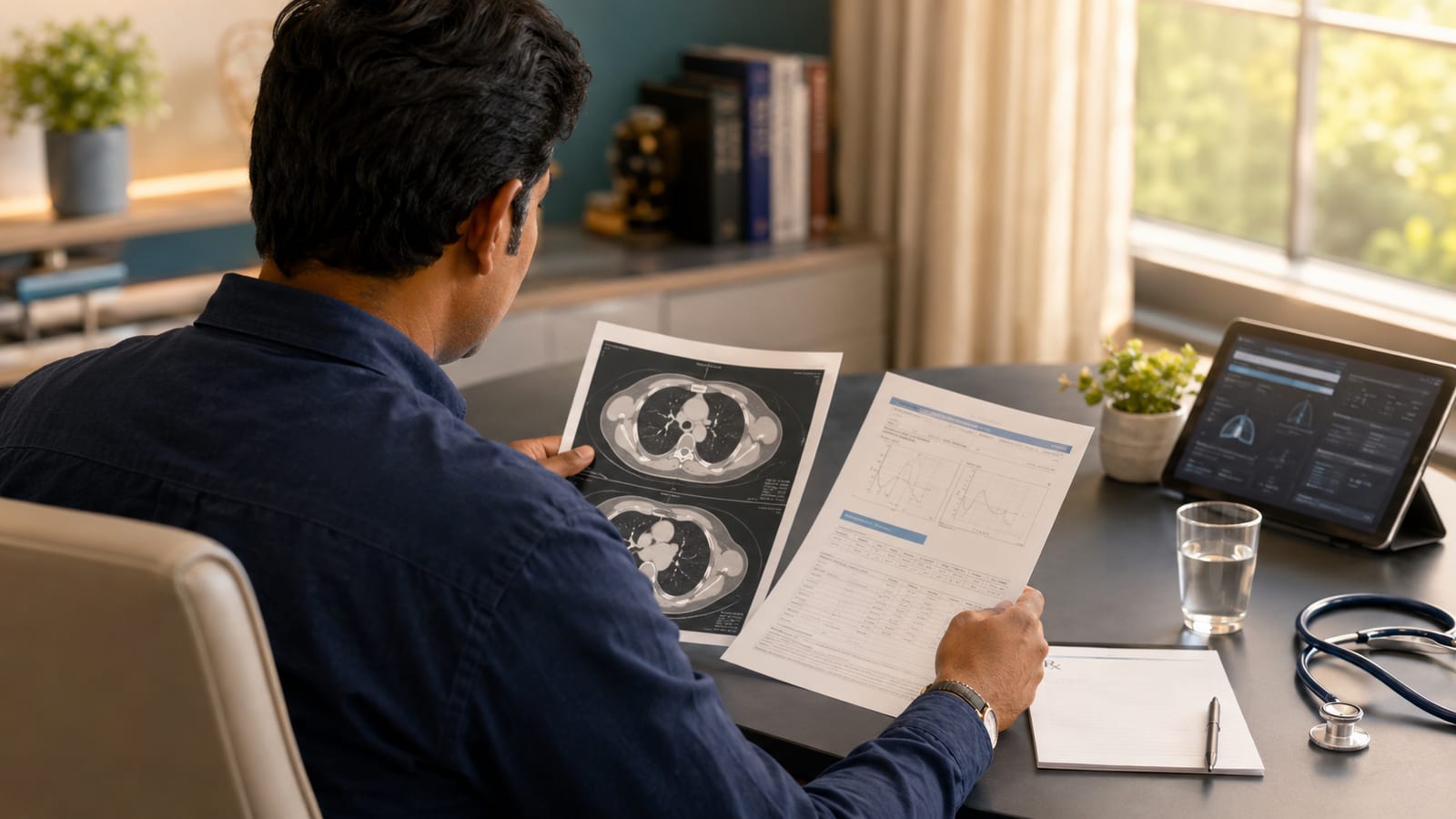
Most post-COVID lung damage gets better on its own. In an Indian study of 207 patients assessed a mean of 63 days after symptom onset, 44.4% had a reduced diffusion capacity and 35% had a restrictive breathing pattern - and yet, in follow-up data reviewed by India’s own expert working group, 80% of patients with abnormal CT findings at 105 days had near-complete resolution by one year. In a randomised placebo-controlled trial of an antifibrotic drug for post-COVID lung disease, 82.3% of patients on placebo improved, compared with 79.7% on the drug. The medicine did nothing the body was not already doing.
That is the honest starting point, and it is not the message most people get. Post-COVID lung damage treatment in India therefore begins with a question rather than a prescription. If you are reading this because a CT scan report used the word “fibrosis”, or because you are still getting breathless climbing two flights of stairs, the useful question is not “how do I fix my damaged lungs”. It is: which kind of post-COVID lung problem do I actually have, and does it need treating at all?
This guide walks through that, in the order a pulmonologist would work through it. I am Dr. Manjunath M Negigoudara - a Transplant Pulmonologist at KIMS Hospital, Electronic City, Bengaluru. I see the full spectrum - people who need reassurance and a walking programme, and, very rarely, people whose lungs never came back and who end up in a transplant conversation. Knowing what the far end looks like is what makes me confident about telling most people they are not headed there.
In short
Most people recover without drug treatment. Pulmonary rehabilitation has the strongest evidence base for any intervention in this space (77-metre improvement in six-minute walk distance across a meta-analysis of 37 trials). Steroids are useful in a narrow inflammatory-pattern subset. Antifibrotic drugs (nintedanib, pirfenidone) did not beat placebo in the FIBRO-COVID trial and should be reserved for very specific CT findings. Transplant is very rare - considered only after 3-6 months of failed medical management. Dr. Manjunath M Negigoudara at KIMS Electronic City runs a structured post-COVID lung assessment: PFT with DLCO, six-minute walk test, HRCT only when it changes management.
First, the word “fibrosis” is probably being used wrongly
In 2022, a working group of senior Indian pulmonologists - including faculty from across the country’s major respiratory centres - published a consensus report in Lung India on how post-COVID lung disease should be managed. Their first recommendation was about language.
Ninety per cent of the group agreed that the term “post-COVID-19 pulmonary fibrosis” should be abandoned. Their reasoning: “fibrosis” implies permanent scarring, and most of what shows up on a post-COVID CT scan is not permanent scarring. It is inflammation, incomplete healing, and areas of lung that are still remodelling. The radiologist writes “fibrotic changes” because that is what the pattern looks like on an image. It does not mean collagen has permanently replaced your lung tissue.
The terms they recommended instead are post-COVID ILD (interstitial lung disease) or post-COVID pulmonary sequelae. The international radiology consensus uses a similar phrase - post-COVID-19 residual lung abnormality.
This is not academic pedantry. Dr. Manjunath M Negigoudara has seen patients arrive at KIMS having been told they have “lung fibrosis”, already started on an expensive antifibrotic drug, making decisions about quitting their job - for a CT finding that would have cleared by itself.
So: if your report says fibrosis, read it as “changes that may or may not resolve, and we need a second look in a few months to know which.”
What post-COVID lung damage actually is
COVID pneumonia inflames the lung tissue itself - the alveoli, the tiny air sacs, and the thin membrane between them and your blood vessels. That membrane is where oxygen crosses over. When it thickens or scars, less oxygen crosses per breath.
That produces three distinct problems, and they need different treatment:
- A diffusion problem. Your lungs fill normally and empty normally, but oxygen does not transfer efficiently across the membrane. This is measured by a test called DLCO. It is the most commonly abnormal finding after COVID pneumonia, and typically the one that improves most over time. Symptom: breathlessness on exertion, sometimes with a drop in oxygen saturation when you walk, while your resting saturation looks perfectly normal.
- A restrictive problem. The lung has become stiffer and holds less air. Measured by spirometry and lung volumes as reduced FVC and TLC. Symptom: a sense that you cannot take a full deep breath.
- An airway problem. Some people come out of COVID with airways that behave like asthma - cough, wheeze, chest tightness, worse at night or with cold air. This one is often mislabelled as “lung damage” when it is actually treatable inflammation of the airways, and it responds well to inhalers.
A fourth group deserves its own mention: people with real, disabling breathlessness whose CT scan and lung function tests are entirely normal. This is common, it is not imaginary, and it does not mean nothing is wrong. Causes include deconditioning after weeks of illness, dysfunctional breathing patterns, a rise in resting heart rate, and post-viral fatigue. It is one of the situations where rehabilitation helps most and drugs help least.
How common post-COVID lung damage is in Indian patients
Most articles on this topic quote American or European figures. Here is Indian data.
Christian Medical College, Vellore studied 207 patients at a mean of 63 days after symptom onset (PLOS Global Public Health, 2024):
| Finding | Result |
|---|---|
| Diffusion capacity (DLCO) below 80% predicted | 44.4% |
| Restrictive pattern (TLC below 80%) | 35% |
| Obstructive pattern | 8.3% |
| Mean 6-minute walk distance | 425 m - 74.2% of predicted |
| Oxygen desaturation of 4% or more during walking (pneumonia group) | 21.7% (vs 4.8% mild COVID) |
Quality of life scores told the same story: patients who had had COVID pneumonia scored 29.2 on the St George’s Respiratory Questionnaire, against 11.0 for those with mild COVID.
A second Indian study of 100 patients at a tertiary hospital, tested one to three months after infection, found a restrictive pattern in 55%, reduced diffusion capacity in 52% and reduced total lung capacity in 62% (Lung India, 2023).
Two things to take from this.
The severity of your original illness is the strongest predictor. In both studies, the people with abnormal results were overwhelmingly those who had COVID pneumonia - who needed oxygen, or admission, or ICU. If you had mild COVID at home and you are breathless now, the odds that your lungs are structurally damaged are low, and the cause is usually elsewhere.
These are early snapshots. Both studies tested people within about three months. That is the peak of abnormality, not the endpoint. A meta-analysis pooling 6-to-12-month follow-up across many countries found impaired DLCO in 39% at six months falling to 31% at twelve (Respiratory Research, 2022). The curve bends the right way.
Do you need to see a pulmonologist? A straight answer
You are probably safe to keep waiting and watching, without a pulmonologist, if all of the following are true: your COVID was mild and managed at home, you are less than eight weeks out, your resting oxygen saturation is 95% or above, you can climb a flight of stairs without stopping, and your symptoms are slowly improving week on week.
You should see a pulmonologist if any of these apply:
- You are more than three months out and your breathlessness has not improved, or is getting worse
- You needed oxygen, hospital admission or ICU during your COVID illness
- Your oxygen saturation drops below 94% when you walk, even if resting saturation is fine
- You still need supplemental oxygen at home
- A CT scan shows persistent changes and nobody has explained what happens next
- You have been started on an antifibrotic drug and want a second opinion on whether you need it
- You have a pre-existing lung condition - COPD, asthma, ILD - that has clearly worsened since COVID
If you are in between - say a resting saturation of 93%, or you are improving but slowly - get reviewed anyway. Nothing on this page is a substitute for someone listening to your chest.
That third point is the one most commonly missed. Resting saturation is a poor screen. A significant number of people with post-COVID diffusion impairment have a perfectly normal reading sitting in a chair and desaturate meaningfully as soon as they move. If you have a home pulse oximeter, check it after walking on the flat for six minutes rather than while sitting.
Do this safely. Stay on level ground, near somewhere to sit. Stop immediately and rest if you become dizzy, get chest pain, or your reading falls below 90%. If you are already known to desaturate on exertion, or you are on home oxygen, do this only under supervision at a clinic, not alone at home.
Get a proper post-COVID assessment with Dr. Manjunath M Negigoudara
A first consultation is mostly a conversation and a walk test, and for most people it ends with reassurance and a plan rather than a prescription. Same-day WhatsApp response for urgent cases.
The tests that matter, and when to do them
There is no fixed schedule of scans that every post-COVID patient should have, and the international radiology consensus specifically discourages rigid protocols (Radiology multisociety consensus statement). Scanning people repeatedly for reassurance exposes them to radiation and finds things that would have gone away.
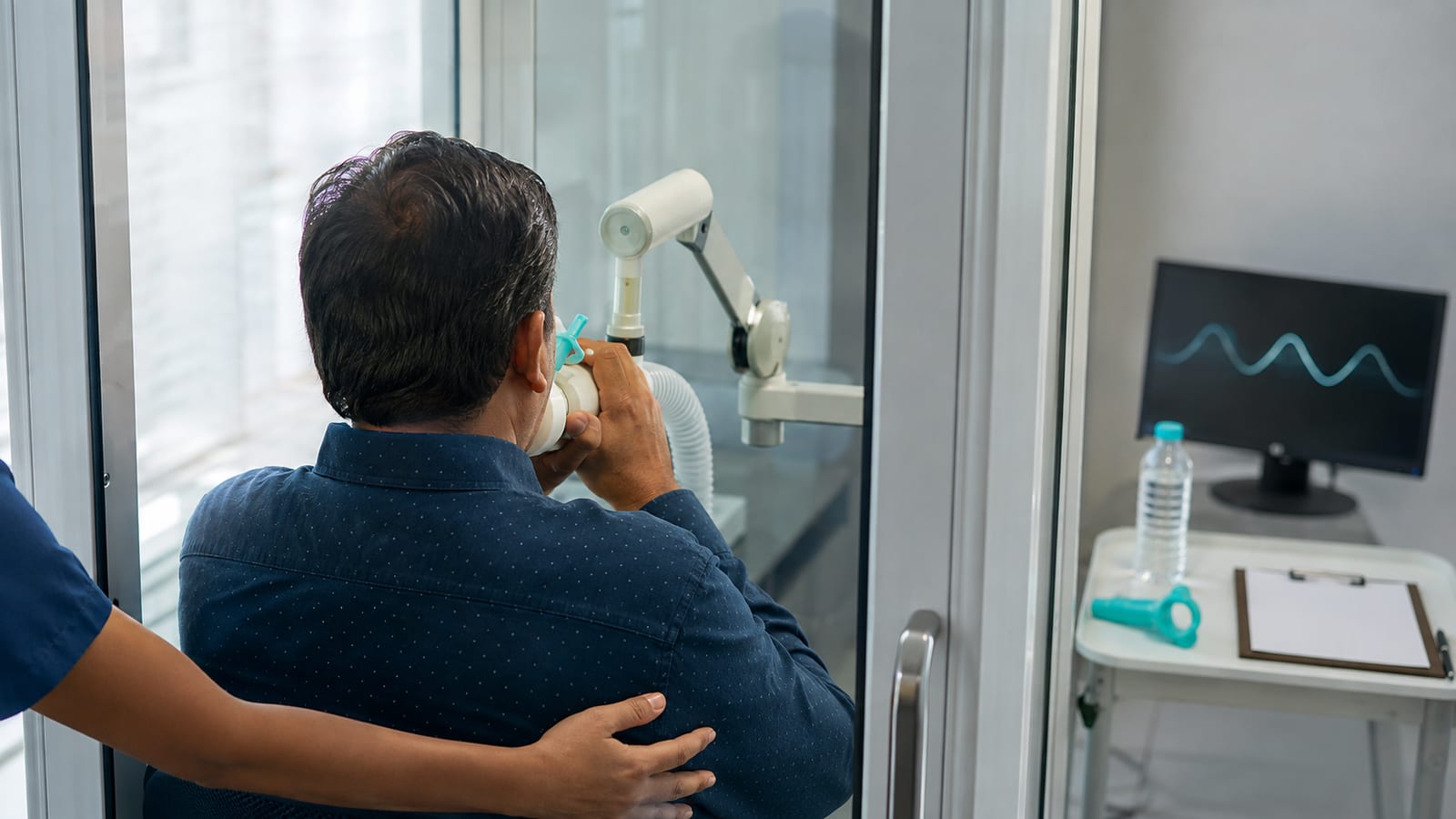
Pulmonary function tests with DLCO - the single most useful test
Spirometry alone is not enough. Standard spirometry can look completely normal in someone whose diffusion capacity is significantly impaired, and diffusion is the abnormality most likely to be present after COVID pneumonia. Ask specifically for PFT with DLCO, sometimes written as diffusion study or DLCO/TLCO. If a lab offers only spirometry, that is an incomplete test for this problem. In Dr. Manjunath M Negigoudara’s practice at KIMS Electronic City, this test is repeated at three to six month intervals while symptoms persist. The trend across two tests tells you far more than any single result.
Six-minute walk test with oximetry
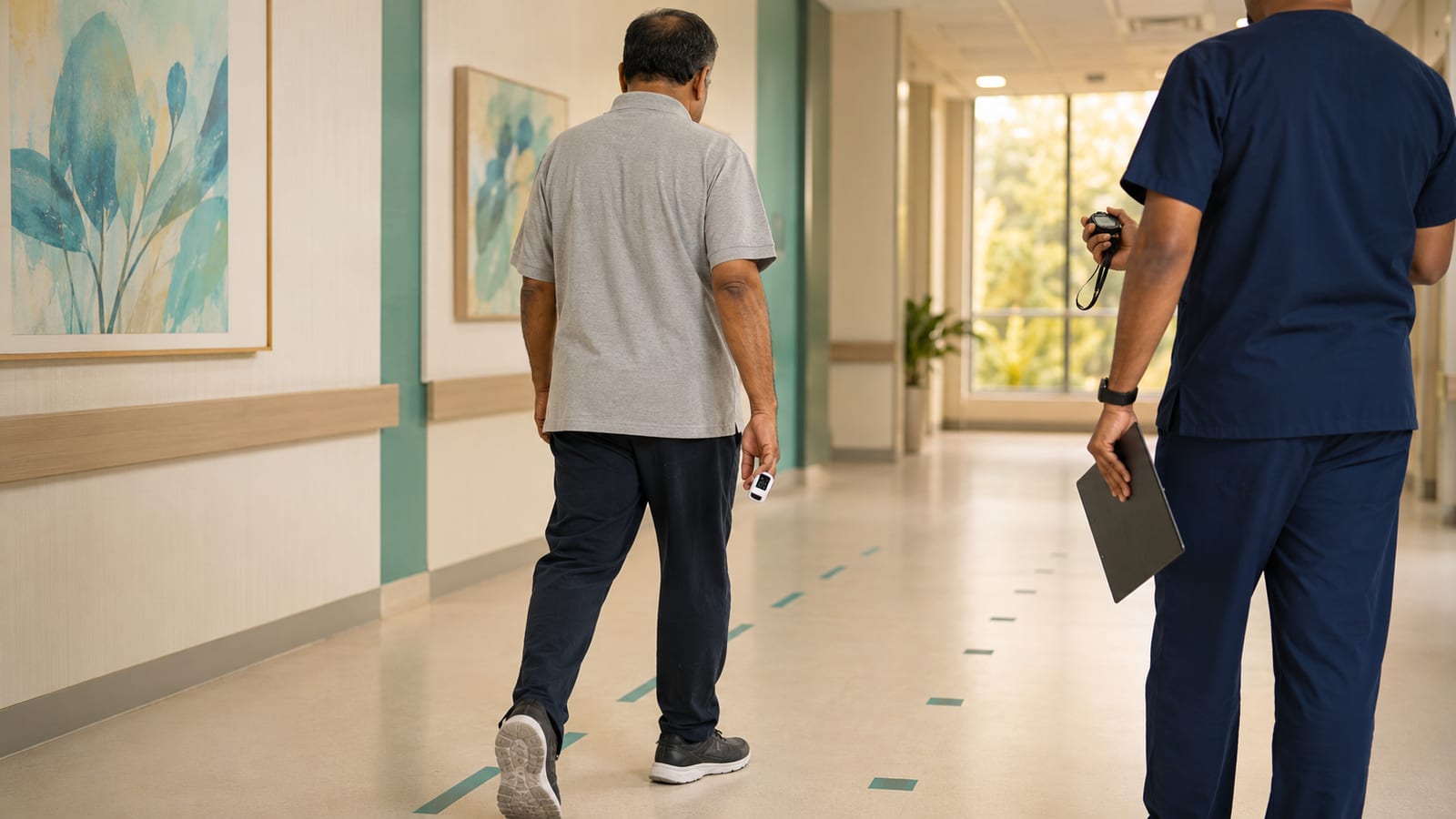
Cheap, quick, and closer to real life than anything done sitting still. You walk a measured corridor for six minutes while oxygen saturation and heart rate are monitored. It picks up exertional desaturation, gives an objective baseline, and is the number we use to measure whether rehabilitation is working.
HRCT chest - fewer than you think
The RSNA international multisociety consensus position: consider a CT for persistent or worsening respiratory symptoms at three months or more after infection, where the symptoms have lasted at least two months and there is no other explanation. For people who were hospitalised with moderate-to-severe disease, a scan three to six months after discharge may be reasonable. What you do not need is a repeat CT every few weeks because you are still tired. If a scan is being ordered, ask what decision the result will change. If the answer is “nothing”, it can usually wait.
Blood tests and the things that are not your lungs
Breathlessness after COVID is often not respiratory at all. Before concluding your lungs are the problem, it is worth excluding anaemia, thyroid dysfunction, deconditioning, anxiety-related breathing pattern disorder, and cardiac causes. In some patients an echocardiogram is more informative than another CT. This is routine in a proper post-COVID assessment and is one of the reasons a scattergun approach of “get a CT and start a tablet” fails so many people.
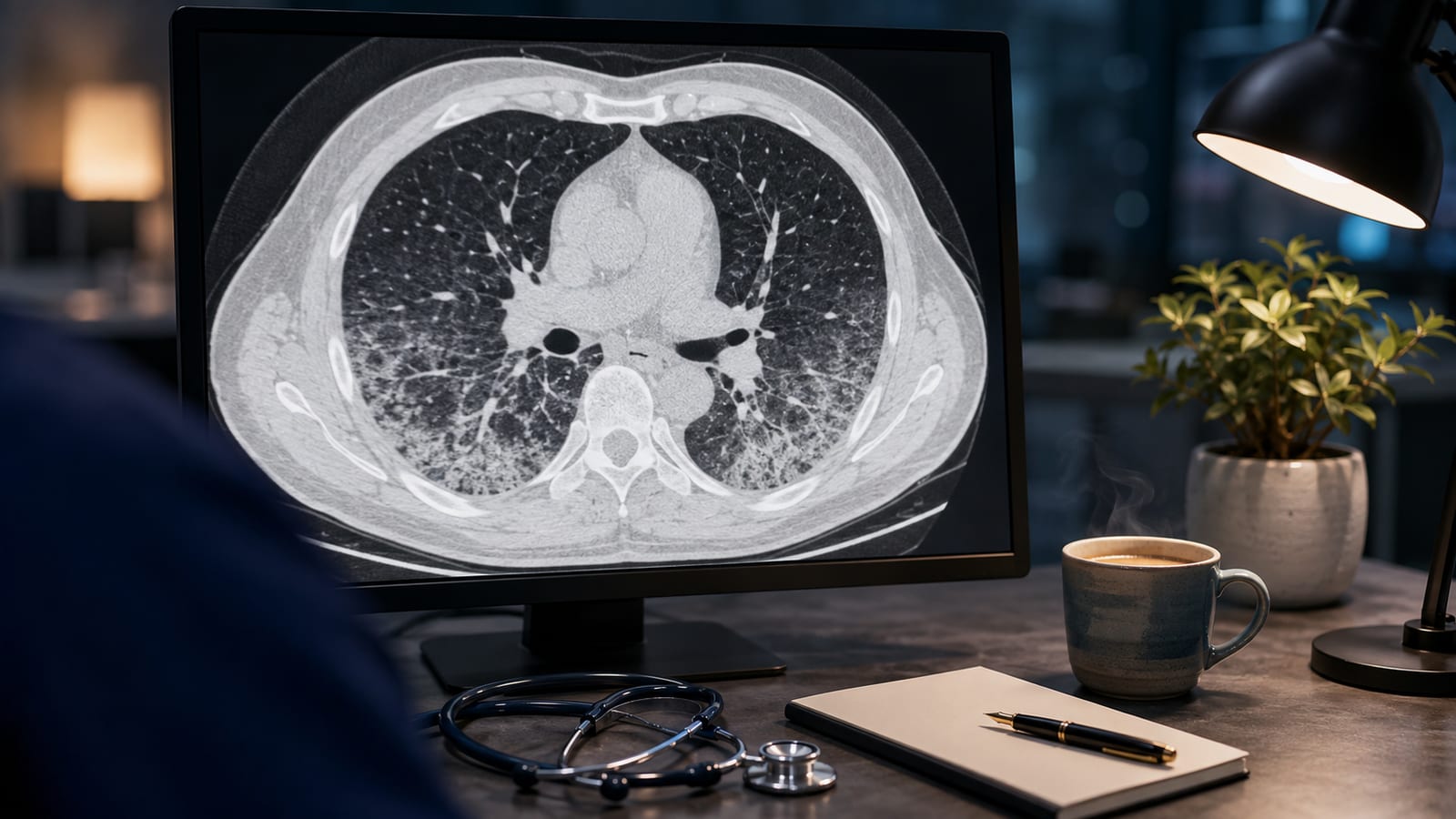
Reading your own CT report without panicking
A few phrases come up again and again. Here is what they mean in this context.
| Term on your CT report | What it means clinically |
|---|---|
| Ground-glass opacity (GGO) | Hazy areas where lung tissue is partially filled or inflamed. Common after COVID pneumonia. Often resolves. On its own, not a reason for antifibrotic drugs. |
| Reticulation / reticular opacities | A fine net-like pattern. Can represent healing, or early scarring. Needs a follow-up scan to tell which. |
| Fibrotic changes / fibrotic-like changes | A description of a pattern, not a diagnosis of permanent scarring. The Indian working group’s whole point. |
| Traction bronchiectasis, honeycombing, architectural distortion | Describe lung structure genuinely pulled out of shape. When combined with symptoms and declining lung function, these justify considering an antifibrotic drug. Alone in someone with normal saturation, they still do not automatically mean treatment. |
| CT severity score | A number describing how much lung was involved. A high score from your acute illness does not predict long-term outcome as reliably as people assume. Symptoms and lung function matter more. |
Treatment - in the order it is used
Post-COVID lung care is a ladder. Most people stay on the first rung. Very few reach the top.
- Time, monitoring and pulmonary rehabilitation - the default for the large majority
- Inhalers, prescribed after assessment, if there is an airway component
- Corticosteroids, for a defined subset with persistent inflammation
- Antifibrotic drugs, for a narrow subset with specific CT findings who have failed steroids
- Long-term oxygen therapy, if hypoxia persists
- Lung transplant assessment, for a very small number of people
The single biggest mistake in post-COVID care in India is jumping to rung four before properly trying rungs one and three.
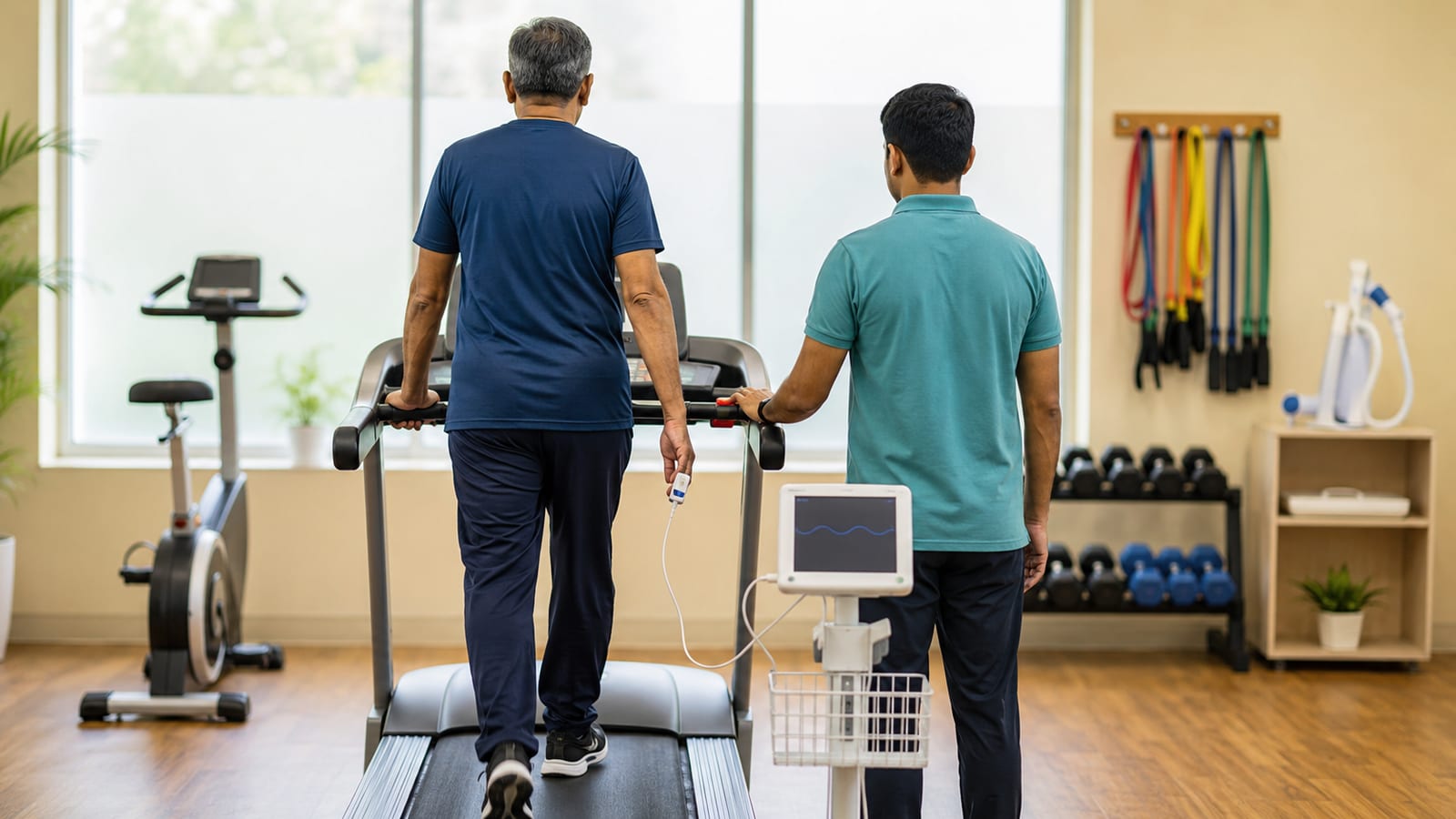
Pulmonary rehabilitation - the treatment with the best evidence
If there is one thing in this article to act on, it is this. Structured pulmonary rehabilitation has better evidence behind it than any drug used for post-COVID lung disease, and it is the treatment most often skipped.
A 2025 meta-analysis of 37 randomised trials covering 3,363 patients found that pulmonary rehabilitation improved six-minute walk distance by an average of 77.95 metres (95% CI 50.91-104.99), along with improvements in breathlessness and quality of life (Therapeutic Advances in Respiratory Disease, 2025). For context, an improvement of around 30 metres is considered clinically meaningful. This is more than double that.
Indian programmes show the same direction. A six-week programme at AIIMS Bhopal for COVID pneumonia ICU survivors produced significant improvement in six-minute walk test and in breathlessness scores compared with controls (Turkish Thoracic Journal, 2022). An eight-week programme reported in Lung India in 2024 across 155 patients improved walking distance, resting oxygen saturation and every quality-of-life domain measured.
What a real programme looks like: four to eight weeks, two to five supervised sessions a week, 30 to 60 minutes per session. It combines graded aerobic exercise, resistance training for the limb muscles that wasted during illness, breathing retraining, airway clearance where needed, and education on pacing.
What it is not: a YouTube video of pursed-lip breathing, a spirometer ball toy used unsupervised, or being told to “do pranayama and walk a bit”. Those are not harmful, but they are not the intervention that produced the numbers above. The gains come from supervised, progressively loaded exercise.
One caution: if you desaturate on exertion, rehabilitation must be started under supervision with oximetry, and sometimes with oxygen support during sessions. Pushing hard at home while your saturation drops into the 80s is not training, it is risk.
Steroids - useful, narrow, and over-prescribed
For patients with persistent symptoms and evidence of ongoing inflammation, corticosteroids are the first drug treatment - and the Indian expert working group positions them ahead of antifibrotics for exactly this reason. The inflammatory, ground-glass-predominant pattern is the one that responds.
The important boundaries:
- Steroids treat inflammation, not established scarring. If the CT shows honeycombing and distortion rather than ground glass, steroids have less to offer.
- They are given as a defined course with a taper, not open-endedly.
- In a country with India’s tuberculosis and diabetes burden, prolonged steroids carry real consequences: reactivation of TB, uncontrolled blood sugar, secondary infections including mucormycosis, bone density loss, and steroid-induced myopathy that can make breathlessness worse by weakening the very muscles you need for rehabilitation.
A meaningful number of people Dr. Manjunath M Negigoudara sees are on steroids months after anyone last reassessed whether they still need them. If you have been on steroids for post-COVID lung disease for more than a few weeks without a formal review of lung function, that review is overdue. Do not stop steroids on your own - they need a supervised taper.
Antifibrotic drugs - the hard truth about nintedanib and pirfenidone
Nintedanib and pirfenidone are established treatments for idiopathic pulmonary fibrosis. During and after the pandemic they were widely prescribed in India for post-COVID CT findings. Here is what the evidence actually shows.
FIBRO-COVID, a phase 2 double-blind randomised placebo-controlled trial published in the European Respiratory Journal in 2025, took 103 patients who had recovered from severe COVID pneumonia with fibrotic interstitial changes on CT and gave them either pirfenidone or placebo for 24 weeks. The primary endpoint was improvement, defined as a 10% or greater rise in FVC and/or any reduction in CT fibrotic score.
- Pirfenidone: 79.7% improved
- Placebo: 82.3% improved
The difference in FVC change did not reach statistical significance (p=0.071), and neither did the difference in CT fibrotic score (p=0.52). The authors’ conclusion, verbatim: “The overall improvements in lung function and HRCT fibrotic score after 6 months with pirfenidone were not significantly different than with placebo.”
Two things stand out. The drug did not beat placebo. And more than four in five patients improved on nothing at all - which is the strongest single piece of evidence for the reassurance at the top of this article. (This trial was conducted in Spain, not India.)
So when is an antifibrotic reasonable?
The Indian working group set out the conditions. All of them involve failing something else first:
- HRCT showing honeycombing, architectural distortion or traction bronchiectasis - not ground-glass opacity alone
- Patients who remain symptomatic and still require oxygen despite four weeks of corticosteroid therapy
- Progressive decline in lung function on serial testing, or clearly worsening radiology
They are explicitly not indicated for ground-glass opacities alone, or for a high CT score in someone who feels well with normal oxygen saturation. On duration, the group reached no firm consensus, with most suggesting four to eight weeks and occasionally extending to six months case by case.
If you are already on one of these drugs
Do not stop it on your own. Book a review with Dr. Manjunath M Negigoudara at KIMS Electronic City and bring your CT report, your PFT results and your prescription. The questions worth asking are: what specific CT finding justified starting this, was a steroid course tried first, what is my repeat lung function showing, and what is the planned stop date? If your doctor can answer all four, that is reassuring. If they cannot, that is a reasonable prompt to ask for a second opinion.
Oxygen at home
Some patients leave hospital on oxygen and stay on it for months. Two points matter.
It is usually temporary. Post-COVID oxygen requirement typically falls over weeks to months as diffusion recovers. It should be reassessed formally - with a walk test on and off oxygen - rather than continued indefinitely by habit.
The flow rate should be prescribed, not guessed. Too little means you desaturate during ordinary activity and cannot participate in rehabilitation. Too much, in people with coexisting COPD, carries its own risks. A titration study during a walk test sets it properly. Do not turn the flow up or down at home on your own judgement; ask for it to be re-titrated instead.
If you have been on home oxygen for more than three months without a formal reassessment, that is a specific reason to come in.
When post-COVID lung disease becomes a transplant conversation
This is the rarest outcome. Almost nobody reading this is headed here. It happens in two situations. The first is someone whose acute COVID caused such severe ARDS that they never came off ventilator or ECMO support. The second, far less common, is someone whose post-COVID lung disease genuinely progresses over months to end-stage respiratory failure despite full treatment.
Internationally, the pattern is documented. In the United States, 364 COVID-related lung transplants were performed between October 2020 and early 2023 - 223 for COVID-related ARDS and 141 for COVID-related fibrosis - and in 2021 COVID accounted for close to 10% of all US lung transplants. A single-centre series reported patients transplanted a median of 111 days after their COVID diagnosis, with good functional recovery in most (Open Forum Infectious Diseases, 2022).
The waiting periods matter and they exist precisely because so many people recover: transplant teams internationally wait four to six weeks after COVID ARDS, and three to six months for post-COVID fibrosis, before even considering transplant - because lung function keeps improving during that window.
The practical threshold for a referral - not a transplant, a referral - is straightforward: if you still need supplemental oxygen to get through ordinary daily activity several months after your infection, and your lung function is not improving on serial testing, you should be assessed at a centre that does interstitial lung disease and transplant work. Being assessed is not the same as being listed. Most people who come through that door are told they do not need one, and leave with a rehabilitation plan instead.
Related reading on this site: Who needs a lung transplant?, ECMO as bridge to recovery vs transplant, Lung transplant cost in India, Life after lung transplant, and our advanced lung failure services at KIMS Electronic City.
What this costs in India, and what insurance pays
Nobody else writing about this topic gives you numbers. Here are the ones that can be stated, with their sources.
Investigations at KIMS Electronic City
For exact current rates on PFT with DLCO, HRCT chest, six-minute walk test, echocardiogram and the basic post-COVID blood panel at KIMS Hospital, Electronic City, please book a consultation and request the financial counselling desk. We publish the range that applies to your specific case rather than a menu price that will not fit yours.
Pulmonary rehabilitation
An insurer’s indicative pricing puts post-COVID rehabilitation in India at an average of about ₹65,000, with a range of ₹60,000 to ₹1,20,000, the higher end in tier-1 cities including Bengaluru (per ManipalCigna indicative pricing). Actual cost depends heavily on programme length and whether sessions are supervised in-hospital or a hybrid of supervised and home-based.
Medication
Antifibrotic drugs are the expensive item, which is another reason not to start one without a clear indication. Generic nintedanib and pirfenidone are both available in India at a wide range of price points; check current market rates with a hospital pharmacy before assuming a figure quoted elsewhere. Steroids and inhalers are inexpensive by comparison.
What insurance covers
Post-COVID care sits awkwardly in Indian health insurance. Broad principles:
- Inpatient admission for post-COVID complications is generally covered under a standard indemnity policy, subject to your waiting periods and room-rent limits.
- OPD consultations and outpatient investigations are typically not covered unless you hold a policy with a specific OPD benefit.
- Rehabilitation is variable. Insurers state that coverage “may” be available subject to policy terms - which in practice means read your policy wording rather than assume. Cashless is possible at network hospitals with pre-authorisation.
- Long-term medication is usually out of pocket.
If you had a documented COVID hospitalisation, keep that discharge summary. It is the document that establishes continuity between your admission and your current problem, and it is what claims teams ask for first.
For a much fuller treatment of how Indian health insurance behaves when respiratory claims get complicated - what gets denied and why - see our detailed guide on lung transplant financing in India. The insurance mechanics section applies well beyond transplant.
What recovery realistically looks like, month by month
Broad pattern, not a promise. Individual recovery varies widely and depends most on how severe your original illness was.
Weeks 0-6. Fatigue dominates. Breathlessness on exertion is expected. Most people are still deconditioned from illness rather than limited by lung structure. Gentle graded activity; no need for scans unless you are deteriorating.
Months 2-3. This is where the Indian studies took their measurements, and where abnormalities are at their most visible. Also where the fork appears: those on a clear upward trend, and those who are stuck. If you are stuck, this is the point to get PFT with DLCO and a walk test, and to start structured rehabilitation.
Months 3-6. The main window for active treatment. Steroids if inflammation is driving it. Rehabilitation running throughout. First follow-up imaging, if imaging is indicated at all. Most people improve substantially here.
Months 6-12. Radiological resolution catches up with how you feel. In the follow-up data reviewed by the Indian working group, of the patients who still had CT abnormalities at 105 days after discharge, 80% had near-complete radiological resolution at one year. Pooled international data shows impaired diffusion falling from 39% at six months to 31% at twelve.
Beyond 12 months. A small minority have persistent, stable abnormality. Stable is the key word - the working group’s position is that severe post-COVID disease tends to plateau rather than progress relentlessly, which is a fundamental difference from idiopathic pulmonary fibrosis. If yours is genuinely progressing after a year, that needs specialist assessment, because a different diagnosis may be hiding underneath the COVID label.
If you are years out from your infection and still breathless, you are not out of options and you are not too late. The commonest findings in that group are deconditioning that never got properly reversed, an undertreated airway component, or a non-respiratory cause that was never looked for. All three are treatable.
Red flags - come in now, not next month
Seek urgent medical attention for:
- Breathlessness that is worsening rather than improving, especially over days
- Resting oxygen saturation below 92%
- Being unable to speak a full sentence in one breath
- Blue or grey lips, tongue or fingertips
- Confusion, unusual drowsiness, fainting or near-fainting
- Chest pain, or breathlessness that comes on suddenly - post-COVID patients have a raised risk of pulmonary embolism, which is a medical emergency
- Coughing up blood
- New fever, night sweats or weight loss - in India, this combination in someone recently on steroids must raise the question of tuberculosis
- Facial or sinus pain, one-sided facial swelling, blackish nasal discharge or crusting, or new eye swelling or double vision in anyone who has been on steroids - these are the warning signs of mucormycosis and need assessment the same day
- Swelling of one leg with calf pain, alongside breathlessness
These need same-day assessment, not an appointment in three weeks.
Why work with Dr. Manjunath M Negigoudara for post-COVID lung care
A fair question, because most people reading this do not need a transplant surgeon. The answer is calibration.
Assessing post-COVID lungs is mostly an exercise in judging severity - deciding who needs nothing but time and exercise, who needs a drug, and who needs escalation. That judgement is easiest to make well if you routinely see the severe end of the spectrum. Having personally managed 250+ lung transplant cases at KIMS Electronic City, Dr. Manjunath M Negigoudara knows what progressive, end-stage lung disease looks like, and the overwhelming majority of post-COVID scans he is shown are not it.
That is what lets Dr. Manjunath tell most patients, with confidence rather than hope, that they are going to be fine - and lets him act quickly on the small number who are not.
Dr. Manjunath M Negigoudara - MBBS (Gold Medalist), Bangalore Medical College; MD Pulmonary Medicine, JSS Medical College; DNB Respiratory Medicine; FIP (Interventional Pulmonology), Manipal Hospitals; Karnataka Medical Council Reg. 116911. Transplant Pulmonologist at KIMS Hospital, Electronic City, Bengaluru. Full clinical profile.
For related consultations, see our best pulmonologist in Electronic City, best lung transplant doctor in Bangalore, and transplant pulmonologist in Bangalore service pages.
Book a post-COVID lung assessment
If you are still breathless, still on oxygen, or holding a CT report nobody has properly explained, bring it in. A first consultation with Dr. Manjunath M Negigoudara at KIMS Hospital, Electronic City is mostly a conversation and a walk test, and for most people it ends with reassurance and a plan rather than a prescription.
Call +91 79937 41199 · WhatsApp Dr. Manjunath · Book a consultation
Frequently asked questions
Is post-COVID lung damage permanent?
How long does it take for lungs to recover after COVID?
I am breathless but my CT scan and lung function tests are normal. What is going on?
Do I need to take nintedanib or pirfenidone for post-COVID fibrosis?
My CT report says “fibrotic changes”. Should I be worried?
Which test should I ask for after COVID?
My oxygen level is normal at rest but I get breathless walking. Is that normal?
Does pulmonary rehabilitation actually work, or is it just exercise?
How much does post-COVID lung treatment cost in India?
Will my health insurance cover post-COVID lung treatment?
Can post-COVID lung damage lead to needing a lung transplant?
I had COVID years ago and I am still breathless. Is it too late to do anything?
Medical disclaimer. This article is general information from Dr. Manjunath M Negigoudara’s clinical practice. It is not a substitute for an individual consultation. For specific advice about your condition, please schedule a consultation. For emergencies, call 108 (India) or go to your nearest emergency department.
Have a question about your case?
Talk directly with Dr. Manjunath M Negigoudara.
Consultations, second opinions and referrals are welcomed by phone or WhatsApp. Mon - Sat, 9am - 5pm at KIMS Electronic City.