
It may seem strange for a transplant doctor to write about palliative care. My work is about adding years of life for people with end-stage lung disease. But most patients with advanced pulmonary fibrosis or COPD will never have a transplant, and every one of them, including the ones who do, lives for months or years with breathlessness, cough, fatigue and fear. How well those are treated decides how they live.
I am Dr. Manjunath M Negigoudara, a Transplant Pulmonologist at KIMS Hospital, Electronic City, Bengaluru, and I run the Advanced Lung Failure and Lung Transplant Clinic. I have written this for World Hospice and Palliative Care Day, 10 October, because palliative care is the part of lung medicine that families are most afraid of, and the part most often offered too late.
In short
Palliative care is care for symptoms, quality of life and planning ahead. In advanced pulmonary fibrosis and COPD it runs alongside every other treatment, including antifibrotic drugs, inhalers, oxygen and a transplant evaluation, not instead of them. The strongest evidence for breathlessness is for rehabilitation, breathing techniques, a handheld fan to the face and specialist breathlessness services; the evidence for morphine is weaker than many expect. Most lung patients are referred in their last weeks, if at all. Asking early, and planning ahead while you are well, is what changes that.
Is palliative care only for the end of life?
No, and this misunderstanding does real harm. Palliative care means care aimed at relieving symptoms and supporting quality of life for anyone with a serious illness. It can start at diagnosis and run for years. End-of-life care is one part of it, not the whole.
The 2022 policy statement from the American Thoracic Society and three palliative care societies describes palliative care as a fundamental right for anyone who needs it, and recommends it early in serious respiratory illness. Its core is symptom assessment and management, conversations about goals and advance care planning, and support for carers. A 2017 international review of palliative care in interstitial lung disease put the problem bluntly: the incorrect belief that palliative care means end-of-life care has created a culture of neglect, and treatments to slow the disease and measures to improve quality of life should both be prioritised.
Can palliative care and a transplant evaluation happen together?
Yes. Families sometimes worry that accepting palliative care will count against them, or signal that they have given up on a transplant. It does not.
The lung transplant programme in Toronto, one of the largest in the world, runs a dedicated palliative care clinic for transplant candidates. In a 2023 report on 102 candidates with interstitial lung disease and 24 with COPD who were co-managed by that clinic, symptom burden, especially breathlessness and cough, was high even among patients still being assessed for surgery. Treating those symptoms well is part of keeping a candidate strong enough to be listed.
The other half of the picture is that, as a Finnish study of patients with idiopathic pulmonary fibrosis put it, lung transplantation is not an option for the majority. Age, other illnesses, frailty or the disease itself rule many patients out. They deserve the same attention to their symptoms and their wishes as any transplant candidate, and they deserve it early.
Why do so few patients with lung disease get palliative care?
Because chronic lung disease does not follow the course people associate with “terminal illness”. It declines in steps, with exacerbations and partial recoveries, so there is rarely an obvious moment to raise it. The studies are consistent.
- In idiopathic pulmonary fibrosis, a US study found 57% of patients died in hospital, only 13.7% had a formal palliative care referral, and 71% of those referrals came within a month of death.
- In a Finnish study of the same disease, 80% died in hospital, and about 42% of decisions about end-of-life care were made in the last three days.
- Compared with lung cancer, a Swedish national study of patients with oxygen-dependent interstitial lung disease found they were less likely to die in a palliative care setting (17% against 40%), less likely to have had an end-of-life discussion (41% against 59%), and more likely to be breathless at the end (75% against 42%).
- In COPD, a small hospital study found only 9% of patients who died had received palliative care services, against 50% of patients with lung cancer.
None of these studies is from India, where formal palliative care for lung disease is rarer still. The pattern they describe, of good care arriving in the last days or not at all, is the one families here describe to me.
What actually helps breathlessness?
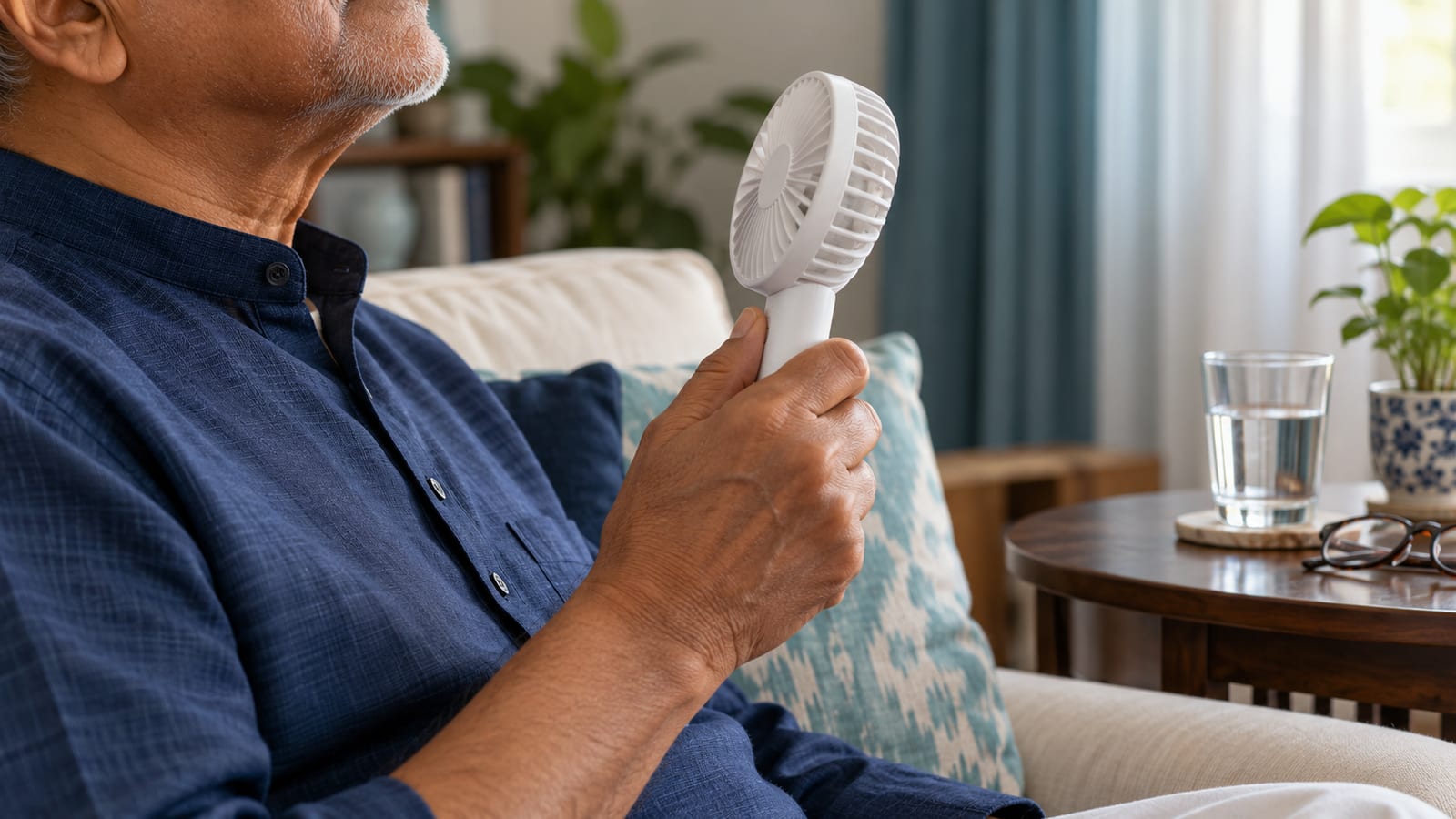
Breathlessness is the symptom that dominates advanced lung disease, and it is frightening. The 2024 European Respiratory Society guideline on symptom management in serious respiratory illness is the most up-to-date summary of the evidence. It suggests:
- Pulmonary rehabilitation and graded exercise. In interstitial lung disease, a 2021 Cochrane review found rehabilitation improved the 6-minute walk distance by about 40 metres, probably improved quality of life, and may reduce breathlessness, with benefits still seen 6 to 12 months later.
- Breathing techniques, such as pacing, pursed-lip breathing and positions that ease the work of breathing, taught by a physiotherapist.
- A handheld fan directed at the face. In a randomised crossover trial of 50 patients, a fan blowing on the face reduced breathlessness, while the same fan blowing on the legs did not.
- Multicomponent breathlessness services, which combine these with education and support. In a London trial of 105 patients, an integrated palliative and respiratory breathlessness service improved patients’ sense of mastery over their breathlessness.
Oxygen helps patients whose oxygen level is genuinely low, and it is prescribed to a measured test rather than to a feeling. Anxiety and breathlessness feed each other, so recognising and treating anxiety and low mood is part of treating the breathlessness itself.
Is morphine the answer to breathlessness?
Families often hear that low-dose morphine relieves breathlessness. The honest answer is that the evidence is weaker than that suggests, and it is worth knowing before anyone starts it.
- A 2016 Cochrane review found some low-quality evidence of benefit from oral or injected opioids, and no evidence for nebulised opioids.
- The large BEAMS trial in COPD, published in 2022, found that regular low-dose extended-release morphine did not significantly reduce the worst breathlessness. An earlier trial of 284 patients also found no difference between morphine and placebo, though there were no cases of dangerous breathing suppression.
- The 2024 European Respiratory Society guideline therefore suggests not using opioids routinely for breathlessness, a conditional recommendation based on very low certainty evidence.
That does not mean morphine is never right. For some patients with severe breathlessness that nothing else has helped, particularly near the end of life, a specialist may still consider it carefully. It means it should be an individual decision, made with a doctor who knows the evidence, rather than an automatic next step.
What is advance care planning, and when should it start?
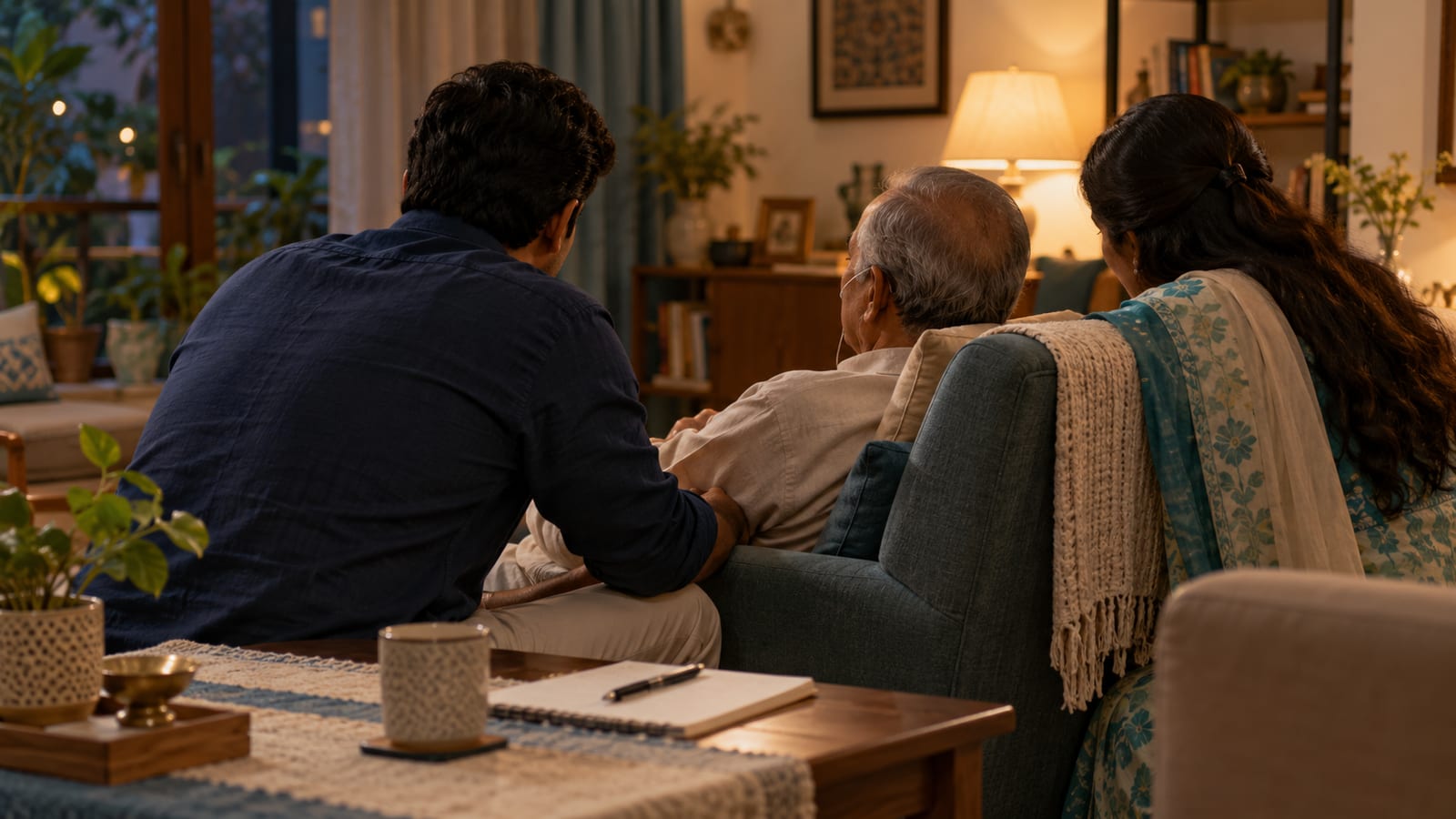
Advance care planning is a set of conversations, ideally written down, about what matters most to you and what you would want if you became very unwell. It usually covers:
- Whether you would want intensive care and a ventilator in a severe flare-up, given what it can and cannot achieve in your disease.
- Where you would prefer to be cared for, and where you would prefer to be at the end of life.
- Who should make decisions for you if you cannot speak for yourself.
- What matters most to you: time, comfort, being at home, being with family.
The best time to start is early, while you are well enough to think it through, not in an emergency department at 2 a.m. A Canadian clinic for idiopathic pulmonary fibrosis that began advance care planning at the first clinic visit, as part of an early integrated palliative approach, saw fewer emergency hospital visits and much higher odds, about 9 times, of patients dying at home or in a hospice rather than in hospital. It was a before-and-after study, not a trial, but it shows what starting early can change.
How do you find palliative care in India?
Access has improved over the last decade, though it is still uneven between states and between cities and rural areas.
- The National Programme for Palliative Care, started in 2012, aims to provide pain and symptom relief and psychosocial support from diagnosis to the end of life, with basic palliative care services at district level.
- Morphine is easier to obtain than it was. Before the 2014 amendment to the Narcotic Drugs and Psychotropic Substances Act, a hospital needed six licences to stock and dispense morphine; now it needs one. Implementation still varies, and India’s total medical morphine use remains very low.
- The Indian Association of Palliative Care, founded in 1994, runs a searchable directory of palliative care services by state at palliativecare.in, including services in Bengaluru and across Karnataka.
- Start with your lung specialist. Ask directly how your breathlessness, cough, sleep and mood can be better treated, whether rehabilitation is available, and who you can talk to about planning ahead.
Advanced pulmonary fibrosis or COPD
Every treatment option on the table, including the ones for comfort
Dr. Manjunath M Negigoudara at KIMS Hospital, Electronic City sees patients with advanced lung disease at every stage. The plan covers whether transplant evaluation is appropriate, how to slow the disease, how to control breathlessness and other symptoms, and how to plan ahead, in writing. Reports can be sent ahead on WhatsApp for a first opinion before you travel.
- Transplant suitability assessed honestly, either way
- Rehabilitation, breathing techniques and oxygen planned to a measured need
- Symptoms and wishes taken as seriously as test results
For patients from Bangalore, across India, and abroad
In Bengaluru, Dr. Manjunath M Negigoudara consults at KIMS Hospital, Electronic City, Hosur Road, reachable from Silk Board, HSR Layout, Koramangala, Bommanahalli and Sarjapur Road. For patients with advanced disease, travel itself can be exhausting, so families from elsewhere in India and abroad can start with a remote review: WhatsApp the HRCT, pulmonary function tests, 6-minute walk result and medication list to +91 88670 59997. Where palliative care services are better reached closer to home, the advice will say so.
Questions to ask at your next appointment
- How advanced is my disease, and what is likely to happen over the next year?
- Am I a candidate for a lung transplant, and if not, why not?
- What can be done about my breathlessness beyond my current medicines?
- Can I join a pulmonary rehabilitation programme, and can someone teach me breathing techniques?
- Do I need oxygen at rest, on walking or at night, based on a measured test?
- What should we do in a sudden flare-up, and whom do we call?
- Can we talk about my wishes for intensive care and where I would like to be cared for?
- Is there a palliative care team I can see alongside my lung treatment?
The honest summary
Palliative care in pulmonary fibrosis and COPD is not giving up. It is the part of care that deals with how you breathe, sleep and feel day to day, and with the decisions ahead, and it can run alongside antifibrotic drugs, inhalers, oxygen and a transplant evaluation. The best evidence for breathlessness is for rehabilitation, breathing techniques, a fan and specialist services; morphine is a careful individual decision, not a routine one. Most lung patients receive this care in their last weeks. It is worth asking for much earlier.
If someone in your family is living with advanced lung disease, Dr. Manjunath M Negigoudara at KIMS Hospital, Electronic City, Bengaluru will look at every option, including the ones for comfort, and put the plan in writing. Send the reports on WhatsApp to +91 88670 59997, or book a consultation.
Frequently asked questions
Is palliative care only for the last days of life?
Does palliative care mean stopping treatment for pulmonary fibrosis or COPD?
Can I see a palliative care team while being evaluated for a lung transplant?
What actually helps breathlessness in advanced lung disease?
Is morphine used for breathlessness in COPD or pulmonary fibrosis?
What is advance care planning?
How do I find palliative care in India?
Can Dr. Manjunath review advanced pulmonary fibrosis or COPD remotely?
Medical disclaimer. This article is general information from Dr. Manjunath M Negigoudara’s clinical practice. It is not a substitute for an individual consultation. For specific advice about your condition, please schedule a consultation. For emergencies, call 108 (India) or go to your nearest emergency department.
More reading
-
 Patient education · World Thrombosis Day Pulmonary embolism - the warning signs, who is at risk, and the long-term risk most people miss
-
 Patient guide · Transplant access Lung transplant registration in India: how NOTTO listing actually works
-
 Patient education · COPD Lung transplant for COPD in India - does it improve survival, and who benefits?
-
 Patient education · Prognosis Pulmonary fibrosis life expectancy in India - what the numbers mean and what changes them

Next available
Book a consultation with Dr. Manjunath M Negigoudara
In person at KIMS Hospital, Electronic City, or by video