
The question arrives in almost exactly the same form every week. A family has been told that a lung transplant is the only remaining option, and they want to know where to put the name down. They are usually expecting something like a queue they can join online.
That is not how it works in India, and the gap between what people expect and what actually happens costs patients time they do not have. I have written this for Lung Transplant Awareness Day, 9 October, because the commonest reason a lung patient never reaches transplant is not the surgery or the cost. It is time lost before the process even starts. This guide sets out the real process: who registers you, what the identification number is for, what the law allows and forbids, the 2023 rule changes, and the national portal that went live in August 2026.
In short
A licensed transplant centre registers you, and only after it has evaluated and accepted you. Since August 2026 that registration goes onto the national e-Pratyaropan portal, which lists you at hospital, state, regional and national level and lets you see your own position. You are given a NOTTO identification number. Registration itself is free, there is no longer an upper age limit, and you no longer need to live in the state where you register.
Can you register yourself for a lung transplant?
Recipient registration in India is done by the hospital, not by the patient. Only a centre that holds a licence to perform lung transplantation can register a lung recipient, and it can only do so after completing a formal evaluation and accepting you as a candidate.
The sequence is fixed and it matters:
- Referral. Your pulmonologist, or you directly, approaches a transplant centre.
- Assessment of candidacy. A transplant pulmonologist decides whether transplantation is indicated at all, and whether now is the right time.
- Formal evaluation. A structured workup covering lungs, heart, kidneys, liver, infection status, cancer screening, nutrition, dentition, psychological readiness and social support.
- Committee acceptance. The centre's transplant team agrees you are a suitable candidate.
- Registration. Only now does the centre enter you on the national portal and you receive your identification number.
This is why I tell families that the evaluation is the thing to get moving on, not the money and not the paperwork. Until the evaluation is complete, there is nothing to register. The ISHLT consensus on candidate selection is explicit that referral should happen while a patient is still well enough to complete that assessment, and the patients who do badly are overwhelmingly the ones who arrive too late to finish it.
What changed with the national e-Pratyaropan portal in 2026?
On 3 August 2026, Indian Organ Donation Day, the Ministry of Health launched e-Pratyaropan, a single national digital platform for organ donation and transplantation, with a mobile app. For a patient waiting for lungs, four things changed.
- One national waiting list. When your transplant hospital registers you, your name is added to the waiting lists at hospital, state, regional and national level at the same time.
- You can see where you stand. Patients get their own login to check their position and updates, instead of relying only on phone calls to the hospital.
- Real-time matching and tracking. Available organs are matched to recipients and allocations are tracked as they happen, which makes the system more transparent.
- Aadhaar-verified pledges. Anyone pledging to donate organs is verified through Aadhaar. More than five lakh verified pledges had been made by August 2026.
What the portal does not change is the order of the steps. You still cannot register yourself: the evaluation by a licensed centre comes first, and the centre registers you. Allocation rules also still differ in detail between states, some of which use their own scoring systems.
What is a NOTTO ID and why does it matter?
The National Organ and Tissue Transplant Organisation sits under the Ministry of Health and Family Welfare and runs the national framework. Beneath it sit regional organisations and, in each state, a state organisation. In Karnataka that state body is Jeevasarthakathe.
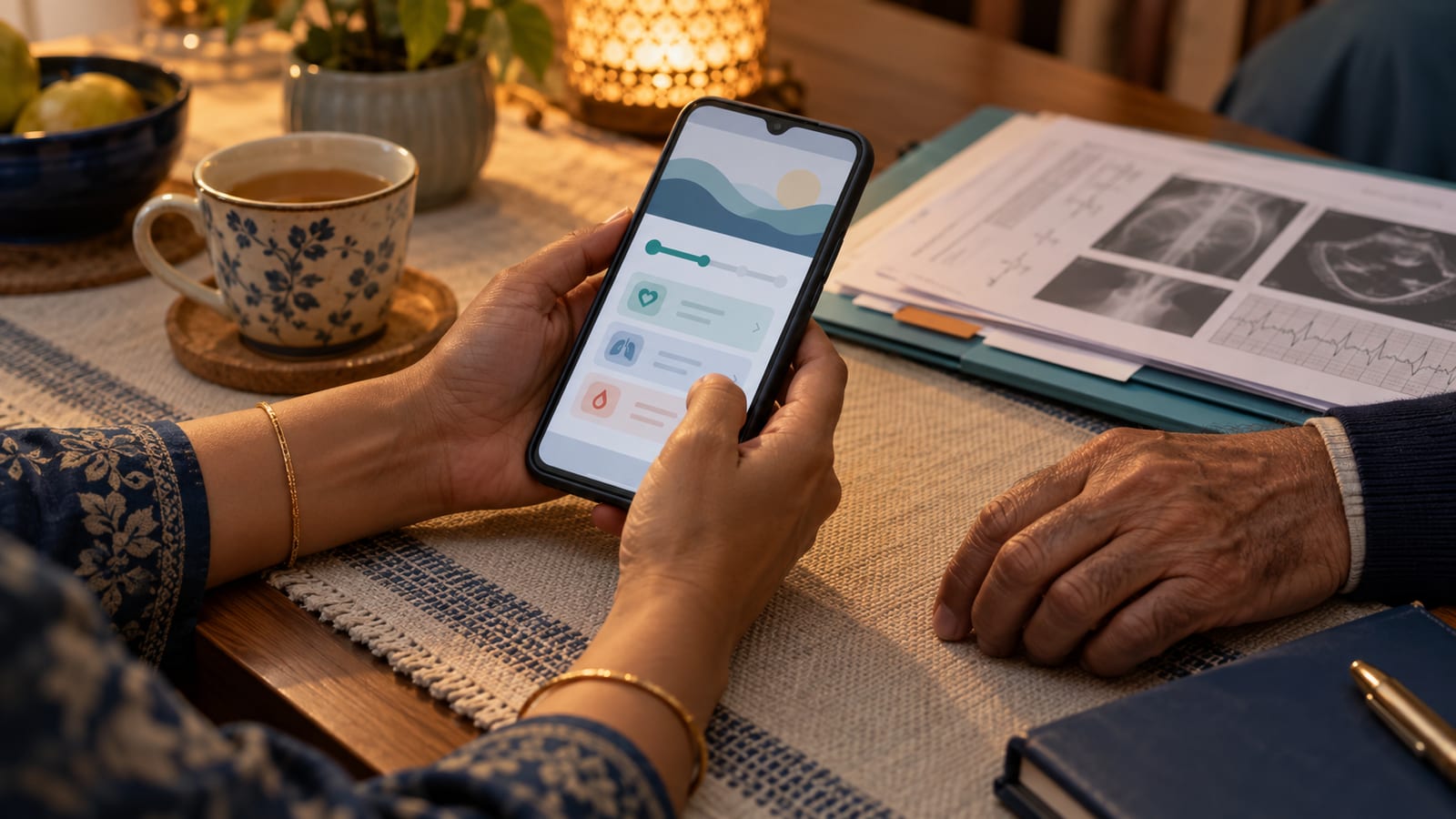
When your centre registers you, you are allotted a unique identification number by NOTTO. Every organ transplant in India, from a deceased or a living donor, is tracked against such an ID, for the recipient and for the donor. It is how the national system identifies you, and with the 2026 portal it is also how your position and updates are tracked.
If you ever change transplant centres, ask both teams, in writing, how your registration and your waiting time will be handled. Rules on transfers can differ between states, and it is worth having the answer before you move, not after.
Practical advice: photograph the document showing your identification number, store it somewhere your family can reach it without you, and quote it in every letter, email and phone call about your transplant. Families under stress lose paperwork, and reconstructing a registration history is far harder than keeping the number safe.
Do you have to live in the state where you register?
This is the change most patients have not heard about and it matters more for lungs than for any other organ.
It used to be that a patient generally had to be a resident of the state where they wanted to register. In February 2023, under a one nation, one policy change, the Ministry of Health removed that domicile requirement. A patient can now register to receive an organ in any state of their choice and have the surgery performed there.
The same 2023 change removed the upper age limit. Previously, patients over 65 could not register to receive an organ from a deceased donor. Age still matters medically, and for lungs the 2021 ISHLT consensus treats age over 70 as a relative contraindication, but an older patient is now assessed on overall fitness rather than excluded by a rule.
Why this matters specifically for lungs
Very few Indian hospitals perform lung transplantation, far fewer than perform kidney or liver transplants. Most lung patients were always going to have to travel outside their home state to reach a centre. Removing the domicile barrier means the state you happen to live in no longer decides whether you can be listed at a centre that actually does the operation.
In practice this means a patient in Hyderabad, Chennai, Kochi or Bhubaneswar can be evaluated and registered in Bengaluru without first establishing residency here. What it does not remove is the practical requirement to be reachable when a donor organ becomes available. Donor lungs tolerate very little delay, so registered patients are generally expected to relocate close to their centre or to be able to travel at a few hours notice. That is a logistics and cost question rather than a legal one, and it is covered on the lung transplant cost in Bangalore page.
How much does it cost to register on the waiting list?
Registration on the waiting list is free. Some states used to charge a registration fee, in some cases ₹5,000 to 10,000; since February 2023 the Centre has told states not to.
What does cost money is everything around it. To be registered you must first be evaluated, and at KIMS Electronic City that evaluation runs to approximately ₹4.5 to 6 lakh. The transplant package itself is a separate ₹36 lakh, with ECMO adding ₹5 to 15 lakh where it is needed and donor organ air transport adding ₹4 to 15 lakh when the donor is in another city. The full breakdown is in the cost guide and the financing options are in financing a lung transplant in India.
Be very clear about one thing. Buying or selling an organ is a criminal offence under the Transplantation of Human Organs and Tissues Act. Families in desperate situations are sometimes approached with offers to shorten a wait or move a name up a list. No legitimate centre will ever ask for a payment to alter a waiting list position, because no legitimate centre can. If you are approached, tell the hospital transplant coordinator and the state authority.
Can you register at more than one hospital?
Families sometimes assume that registering at two or three hospitals multiplies their chances. It does not. National guidance is that a patient is registered through a single transplant centre, and a single national list cannot allocate fairly if the same person appears on it several times.
Since August 2026 there is also nothing to gain from trying: one registration already places you on the hospital, state, regional and national waiting lists. If you decide to move to a different centre, ask both centres to handle the transfer formally, and get in writing how your waiting time is treated.
Choosing the centre therefore matters. The question worth asking is not which hospital is closest, but how many lung transplants that centre performs in a year, because outcomes in transplantation depend on a whole team having done the procedure many times. The KIMS Institute of Heart and Lung Transplant has completed 780+ thoracic transplants, and Dr. Manjunath M Negigoudara has personally managed 250+ lung transplant cases within it.
How are donor lungs allocated?
When a deceased donor becomes available, recipients are selected on clinical need, the time already spent waiting, blood group compatibility and, where relevant, tissue characteristics.
Lungs carry one additional constraint that kidneys and livers do not, and it surprises most families: size. A donor lung has to physically fit the recipient's chest cavity. A very tall patient and a very short patient each wait for a narrower pool of donors than someone of average build. This is not something you can influence, but it explains why two patients with the same blood group and the same severity can wait very different lengths of time.
| Factor | What it does |
|---|---|
| Clinical need | Sicker patients are prioritised, which is why you must report any deterioration rather than waiting for a review |
| Waiting time | Time already spent on the list counts, though states weigh it differently in their scoring |
| Blood group | Must be compatible, and this narrows the donor pool considerably for some groups |
| Chest size and donor lung size | Specific to lungs. The organ has to fit, which affects height extremes most |
| Geography | The retrieving hospital has the first option, then the state pool, then the regional and national pools, because donor lungs tolerate very little travel time |
Allocation working outward from the retrieving hospital is why the centre you register at has practical consequences even now that domicile is no longer a barrier to registering.
How long is the wait?
I will not give you a number, and I would be sceptical of any centre that does. The honest position is that waiting time depends on your blood group, your chest size, how unwell you are and how many suitable donors become available within your allocation area, and none of those can be predicted for an individual.
What I can tell you with confidence is the thing that is within your control. Registering early matters more than anything else. Patients referred late frequently arrive too unwell to complete an evaluation, and at that point the question of waiting time never arises because transplant is no longer on the table. The triggers for referral in fibrotic lung disease are set out on the interstitial lung disease page and in who needs a lung transplant.
What should you do while waiting for a transplant?
Waiting is not passive. What you do during it measurably affects how you come through surgery.
- Stay as strong as you can. Pulmonary rehabilitation and supervised exercise preserve muscle. Patients who arrive at theatre deconditioned recover more slowly.
- Keep your nutrition up. Both underweight and significantly overweight are problems. Your team will give you a target range.
- Use oxygen if you have been prescribed it. Under-using it to feel independent costs you exercise capacity, which costs you recovery.
- Report deterioration immediately. Clinical status affects priority, and a change noticed early can be acted on.
- Keep vaccinations current and treat dental problems before listing, because both become harder once you are on immunosuppression.
- Stay reachable. Keep a phone charged and on, keep a bag packed, and make sure someone can drive you at any hour.

Lung transplant evaluation · KIMS Electronic City
Talk to Dr. Manjunath M Negigoudara before you worry about the paperwork
Registration cannot happen until an evaluation is done, so the evaluation is the step that matters. Dr. Manjunath M Negigoudara is a Transplant Pulmonologist at KIMS Hospital, Electronic City, Bengaluru, and has personally managed 250+ lung transplant cases within the KIMS Institute of Heart and Lung Transplant, which has completed 780+ thoracic transplants.
- Whether transplant is indicated at all, and whether now is the right time
- What the evaluation involves and how quickly it can be completed
- How registration would work in your particular situation, including from another state
- Whether ECMO would be needed as a bridge
Why work with Dr. Manjunath M Negigoudara
Dr. Manjunath M Negigoudara is a Transplant Pulmonologist at KIMS Hospital, Electronic City, Bengaluru. He holds MBBS as a Gold Medalist from Bangalore Medical College, MD in Pulmonary Medicine from JSS Medical College, DNB in Respiratory Medicine and a Fellowship in Interventional Pulmonology from Manipal Hospitals. Karnataka Medical Council registration 116911.
He has personally managed 250+ lung transplant cases within the KIMS Institute of Heart and Lung Transplant, which has completed 780+ thoracic transplants. He has published in the European Respiratory Journal and the Journal of Heart and Lung Transplantation, and presented India's first redo double lung transplantation at the ESOT 2025 Congress in London.
The practical reason this matters when you are thinking about registration: the same clinician who decides whether you are a candidate also manages the ICU course, the immunosuppression and the airway afterwards. Advice about listing from someone who will also be there on day one after surgery is different in kind from advice given at arm's length.
For patients from Bangalore, across India, and abroad
Bengaluru and Karnataka
KIMS Hospital is on Hosur Road at Konappana Agrahara, opposite the PES University EC Campus, about 15 minutes from Silk Board on the Electronic City elevated expressway and served by the Yellow Line metro. In Karnataka the state organisation is Jeevasarthakathe, which works within the national e-Pratyaropan system. Patients travel in from Mysuru, Mangaluru, Hubballi-Dharwad, Belagavi, Kalaburagi, Shivamogga, Tumakuru, Davangere and Ballari, and locally from HSR Layout, Koramangala, Sarjapur Road, Jayanagar, JP Nagar and Bommasandra.
Across India
Because the domicile requirement has been removed, patients from Chennai, Coimbatore, Madurai, Salem, Hyderabad, Warangal, Vijayawada, Visakhapatnam, Tirupati, Kochi, Thiruvananthapuram, Kozhikode, Goa, Mumbai, Pune, Nagpur, Ahmedabad, Delhi NCR, Kolkata, Bhubaneswar, Guwahati, Lucknow, Patna, Ranchi and Raipur can now be evaluated and registered in Bengaluru without establishing residence in Karnataka first. Send your HRCT images, pulmonary function report with DLCO and recent blood work on WhatsApp before travelling, so a long journey is only made if it is genuinely needed. Kempegowda International Airport is about 45 km from the hospital.
International patients
Patients are evaluated from Bangladesh, Nepal, Sri Lanka, the Maldives and Bhutan, from Oman, the UAE, Saudi Arabia, Iraq, Yemen, Kuwait, Bahrain and Qatar, from Kenya, Tanzania, Ethiopia, Uganda, Rwanda, Sudan, Nigeria and Ghana, and from Myanmar, Indonesia and Malaysia. Allocation rules for foreign nationals differ from those for Indian citizens and are applied strictly, so raise your nationality and residency status at the very first consultation rather than later. A written clinical opinion can support a medical visa application where travel is recommended.
Questions to ask at your first transplant appointment
- Am I a candidate at all, and if not yet, what would have to change?
- How long will the evaluation take, and can any of it be done closer to home?
- How many lung transplants does this centre perform in a year?
- If I live in another state, does anything about my registration work differently?
- What is my realistic position given my blood group and my chest size?
- What would trigger a move up the priority order, and how do I report it?
- If I deteriorate before a donor is found, is ECMO an option here?
- What is the total written estimate, including the evaluation and the waiting period?
If you would rather have these answered before committing to a visit, send your reports for a written second opinion instead. Many families find that the more useful first question is not how to register, but whether transplant is genuinely needed yet.
Frequently asked questions
How do I register for a lung transplant in India?
Do I have to live in the state where I register?
Is there an age limit for registering for an organ transplant?
What is e-Pratyaropan?
How much does it cost to register on the waiting list?
What is a NOTTO ID and why does it matter?
Can I register at more than one hospital to improve my chances?
How are donor lungs allocated between patients?
How long is the wait for a lung transplant in India?
What happens if I get too sick while I am waiting?
Is organ trading a real risk I should worry about?
Who can I talk to about starting this process?
Medical disclaimer. This article is general information from Dr. Manjunath M Negigoudara’s clinical practice. It is not a substitute for an individual consultation. For specific advice about your condition, please schedule a consultation. For emergencies, call 108 (India) or go to your nearest emergency department.
More reading
-
 Patient education · World Thrombosis Day Pulmonary embolism - the warning signs, who is at risk, and the long-term risk most people miss
-
 Patient education · World Hospice & Palliative Care Day Palliative care in pulmonary fibrosis and COPD - living better with advanced lung disease
-
 Patient education · COPD Lung transplant for COPD in India - does it improve survival, and who benefits?
-
 Patient education · Prognosis Pulmonary fibrosis life expectancy in India - what the numbers mean and what changes them

Next available
Book a consultation with Dr. Manjunath M Negigoudara
In person at KIMS Hospital, Electronic City, or by video